A SHORT HISTORY OF TWINE
Sisal production in the Yucatan—the "Twine Trust"
3/12/20267 min read
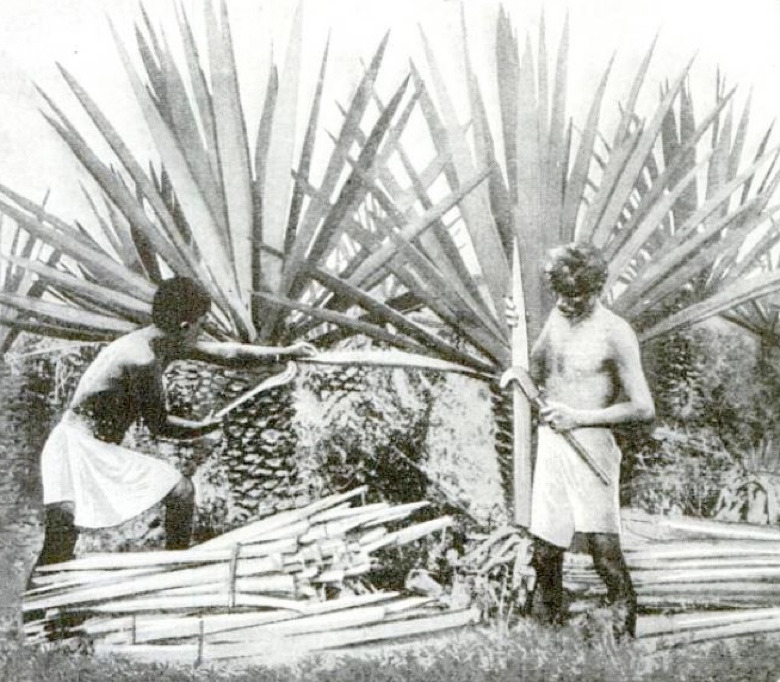
If you've imbibed Mezcal, of which Tequila is one type, you might know that it's derived from the Agave plant. You might not know that Agave leaves are used to produce another item, one which was once essential to agriculture and that many farmers still find today as they drag their farm implements through their acreages: sisal twine.
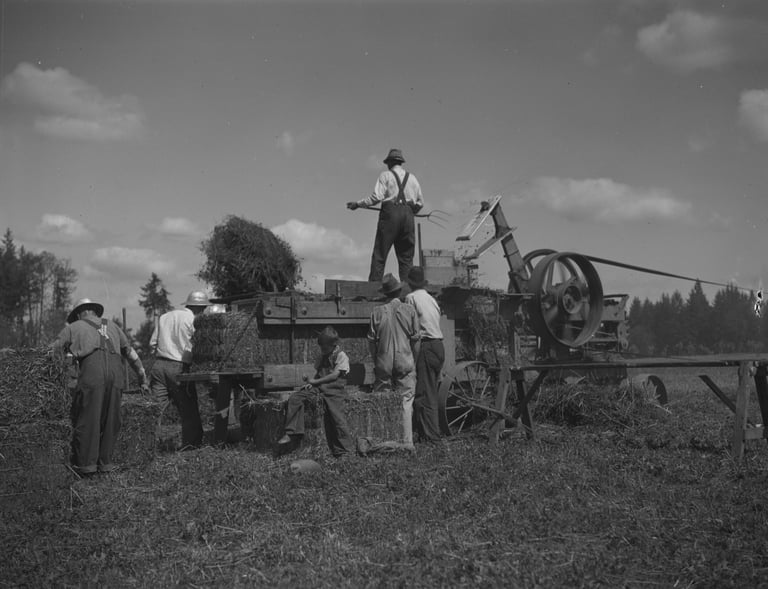
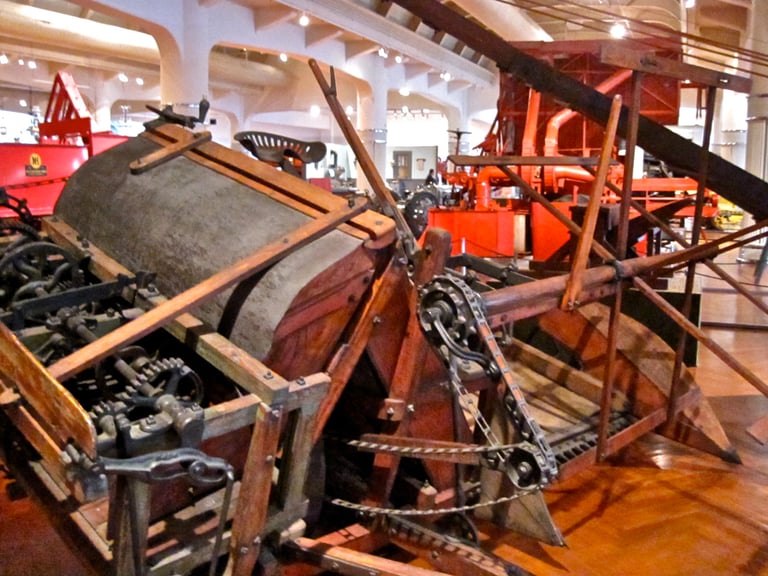
Sisal had been used for centuries by Latin Americans, but not until 1878, when McCormick's 'twine binder' was invented, did it find its important niche in agricultural history. Prior to that, wheat shocks were hand-tied with wire. The new twine-utilizing machine, which collected wheat stalks into a bundle and tied the sheaves, was operated by one man doing the work of what had heretofore been the labor of six. By 1882, sisal twine was available in Idaho and testimonials were coming in for the reaper-binder, some claiming a machine could harvest 13 acres a day.
workers harvesting henequin (agave)
Almost all sisal product in the U.S. came from the Yucatan Peninsula of Mexico at that time. Plantations of henequen, the agave used for sisal, sprang up and became seven-eighths of the Yucatan trade, with three-quarters of its 200,000 population deriving a living from it. To put sisal's value in perspective, California was drawing twenty million dollars a year worth of gold when the Yucatan was making twenty-one million from sisal. Almost all that crop went to the U.S.
The average sized henequn plantation required $130,000 to fund the seven years required to get it into production. Yucatan planters, rather than paying 20 percent to local lenders, sought U.S. capital at 9%, first from bankers, then from cordage producers who insisted to be paid in product, not cash, a practice that became burdensome and left the producers beholden to their lenders. It also opened the door for American capitalists to influence and then control the sisal market.
Sisal was so valuable that it was called "The Green Gold of Yucatan" and American twine spinners were cranking out 150,000 tons of twine a year, almost all of its product made from Yucatan sisal. Buyers and researchers tried to find substitutes—wiregrass, flax, paper and other fibers—but all failed except manila, a product derived from musila textilis, a banana species grown in the Phillipines. It was in some ways a superior product but far more expensive, weather vagaries impacting its production. Shipping such a great distance at a profitable rate was as yet a thing of the future. The Yucatan product, all shipped from the peninsula's only port, Progreso, was just six hundred miles away.
It was at that time said that 'the world's supply of bread literally hangs by a thread—a thread of binder twine'. Without sisal to complete the binder process, the wheat crop could not be harvested. Farmers needed a lot of twine, nine pounds of twine per acre to tie their sheaves, and the U.S. had 72 million acres of wheat in production in 1889. In Michigan alone, farmers used 12 million pounds of sisal twine per year for the harvest and as important as the binder-reaper was, it was unusable without sisal. The McCormick company saw the product's importance and jumped into the trade chain. The company, once it conjoined in 1902 with Deering, Plano, Milwaukee Harvester, and Wardner, Bushnell and Glessner, the combined unit, thereafter known as International Harvester, being worth $120 million dollars in capital (four and a half billion dollars in today's cash). The merger eliminated competition in not only production machines but twine, with IH controlling 99% of the twine trade at one time.
The notion of a sisal trust became apparent as early as 1890, when Montgomery Ward offered twine made of fifty percent sisal and fifty percent manila for a third less than the cost of 'Trust' offerings. The Midwest states, heavily dependent on wheat production, saw an opportunity to battle the Trust by creating prison factories where sisal twine could be spun for their farmer-citizenry. Eight states eventually developed twine factories in their prison systems, Minnesota being the first in the 1880s, North Dakota and Kansas in 1899, South Dakota in 1909, Wisconsin in 1916, and Michigan in 1909. Sixty thousand Michigan farmers had petitioned the state to create a sisal production factory at the prison. Canada had its own similar operation in Ontario by 1894.
Yucatan's governor Olegario Molina becamepoised in power through a secret deal with International Harvester made in 1902. Molina's deal required him to make every effort to keep sisal prices low, an action for which he would get one-eighth to three-quarter a cent for every pound of sisal that went through his hands. Prices started going down immediately, reaching just three cents a pound to producers by 1911, driving out small farmers and allowing Molina, who had been given a $600,000 credit line by International Harvester in his secret deal, to buy sisal operations cheaply. During that time, sisal production had nearly doubled from half a million bales to almost a million. Despite Molina's actions, he was revered by many for his work on railroads, involvement in banks, and the creation of shipping routes and other infrastructure.
Mexico entered a period of civil war in 1910 that would last a decade. Midway through that era, in 1915, Yucatan—due to its distance from the power centers, typically removed from the fighting—suffered closure of its only port at Progreso and a quarter million bales of sisal were held up—half of that IH's and the rest the prisons' and other cordage manufacturers'. Secretary of Agriculture David Houston, saying that 200 milllion pounds of sisal were used for American crops each year, warned crop disaster was inevitable without it. The U.S. parked warships in the harbor and threatened military action to open the port, ending the impasse. Soon after, Congressional hearings started to investigate the Twine Trust.
After many weeks of testimony by cartel members in early 1916, during which the 'cartel' testified it was immune to antitrust laws because it was a foreign entity (despite using American investors), the North Dakota prison warden spoke on behalf of American farmers. He noted that "sisal is two cents more a pound this year"—meaning that a half million dollars was lost to North Dakota farmers alone. Every further increase of a penny was a quarter million dollars.
The troubled Mexican state, advocating against foreign interests which had become prevalent in the Diaz era from 1876-1911 (President Diaz' encouragement of such investment resulted in considerable American control of railroads and private property, so much so that it was believed that more American money than Mexico was in the country), formed a regulating committee in 1912 aimed at price control and nationalization, and the committee reached into sisal in 1915. By November no planter could sell and no buyer could purchase sisal without going through the committee. The Mexican government thus ended that era of the sisal trust, establishing its own.
The U.S. Congressional hearings yielded little immediate action, but the onset of the World War soon after allowed the Food Administration to strike a deal with Yucatan producers to freeze sisal prices at a sustainable level in 1917. Two years later, moneyed parties created the "Eric Corporation", a consortium of American entities intended to monopolize sisal. It fell when a 1927 Supreme Court decision did rule that the Mexican-American Trust was subject to U.S. anti-trust laws and the free market returned to sisal.
The sisal trust was unlike other American monopolies like American Sugar Refining and United Fruit, which held massive chunks of the property in Cuba and Latin America on which their crops were grown. McCormick and International Harvester never owned land, instead applied administrative and pricing pressure by shrewd leverage over local officials. Though there were a thousand haciendas, 850 of them having raspers and packing plants in 1910, just 20-30 families produced 50% of sisal and controlled 80-90% of the trade, most of which IH had a hand in.
The prison system of twine production that arose to battle the trust was, as you might imagine, subject to its own problems, including a 1919-1920 event at South Dakota where workers sabotaged the product by cutting the twine as it was balled. One farmer found a ball stuffed with rags. A yearlong investigation ensued and farmers were reimbursed after eighteen farmers sued.
Other problems would plague the sisal industry. Insects, during high infestation years, plagued not just crops but the sisal that bound them. hoppers or crickets chewed through the twine bindings of a crop it became difficult to collect and manage. By the 1930s, manufacturers applied oil to twine to deter the crickets and grasshoppers, and after 1938's particularly bad infestation Kansas increased the oil usage by fifteen percent. Sisal also proved to be problematic for wool producers who used it to bind their woolsacks. Small twine fibers separated and entered the wool, interfering with manufacturing, so sheepmen were paid two cents a pound more to use cotton twine instead of sisal.
Price wars came to the sisal industry in 1932, too, when IH dropped prices by 3/4 a cent, forcing the prison systems to follow suit. Production was curtailed, money was lost, and by 1950 the twine business was "a shadow of its former self" and most prison factories had closed—though Minnesota's lasted until 1970, shutting down after making a billion pounds of cordage; it had been the first prison factory for sisal twine, Irish consultants helping to install the first twine-making machinery in 1891 and the facility making a million pounds annually within just a year. Prisoners made ten cents a day, worked ten hours a day six days a week.
When the pick-up baler was invented in the mid-1940s, just as binders were being replaced by the grain combine, most sisal went to its usage, with International Harvester still involved in sixty percent of sisal purchasing. But by 1965 plastic manufacturers were devising a way to substitute a propylene product for the natural fiber. As sisal costs increased, the plastic twine made inroads and by 1990 sisal twine sales were just half of what they were in 1974 and by 2000 just twenty percent of that total. Today, plastic twine makes up 85% of the market.
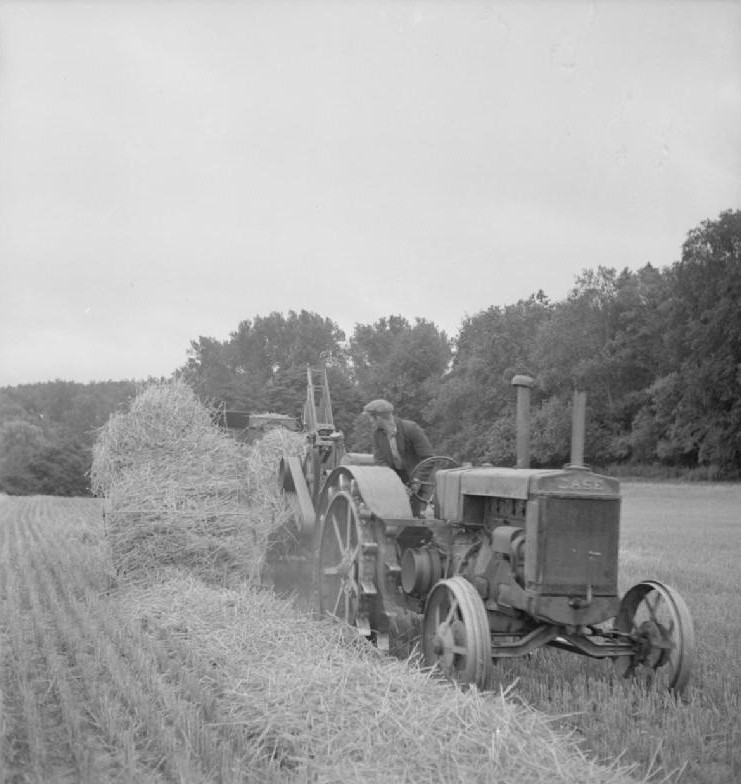
an early binder