BLACKFOOT NEWSPAPER EDITOR WRONGED (OR) EDITOR'S FOSTER DAUGHTER ASSAULTED
1913 CASE CONVICTING EDITOR OF SEXUAL ASSAULT OVERTURNED PLUS RESULTANT FALLOUT
4/23/202616 min read
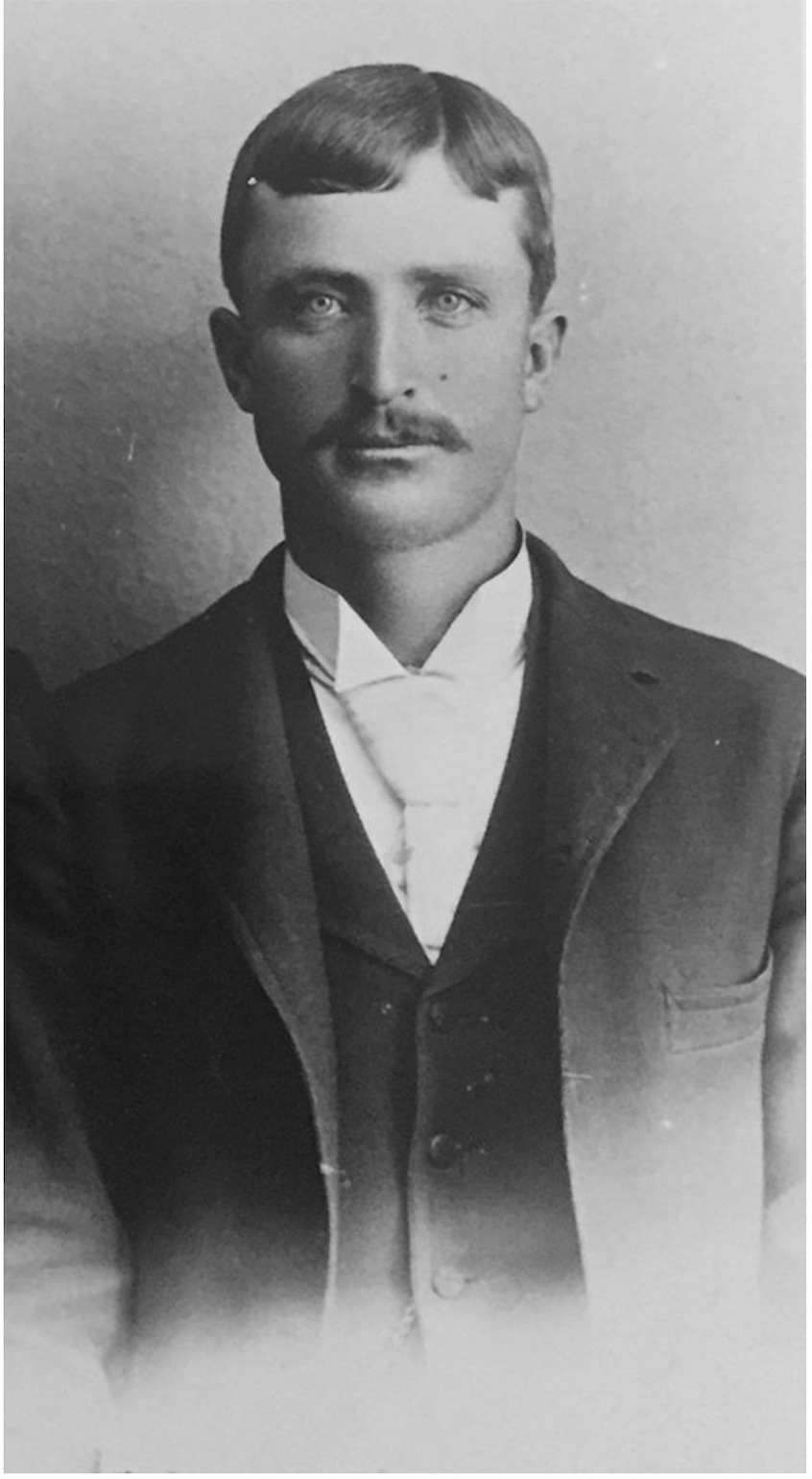
BYRD TREGO
Over a century ago in Blackfoot, a he-said-she-said sexual predator scenario, not unlike so many others played out today in the viral media, transpired when the prominent owner of the official local paper, The Idaho Republican, was charged and convicted of interfering with an underage girl—a foster child he had reportedly groomed through the three years she lived with him and his wife. The trial and surrounding attention had all the hallmarks of today's trials that blames the victim, besmirches the character of witnesses and the victim, and fogs the facts with innuendo and side-stories that evade the essence of the offense. And, of course, there is always the question of reasonable doubt: was the accused truly a perpetrator or was he framed?
In 1910, according to reports, Byrd Trego had gone shopping for an adoptee in Boise at the Children's Home Finding and Aid Society (pictured below).
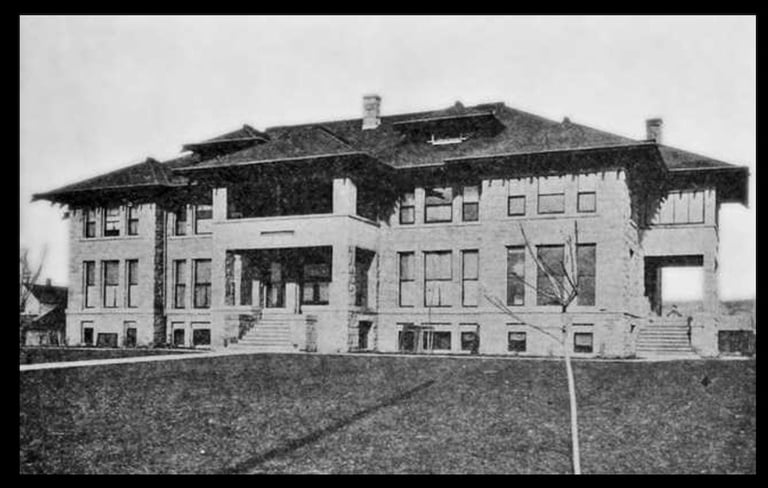
The institution had, since June of 1908, cared for 465 children and had a new receiving home courtesy of the State and Idaho citizens and was overseen by superintendent O. P. Christian, who would play a part in Trego's lengthy ordeal. Trego's wife, according to trial testimony, wanted him to find a boy that he might train to take over the newspaper business but Trego claimed there were none 'with the makin's' for the profession so selected thirteen-year old Nellie May to live with him and his wife.
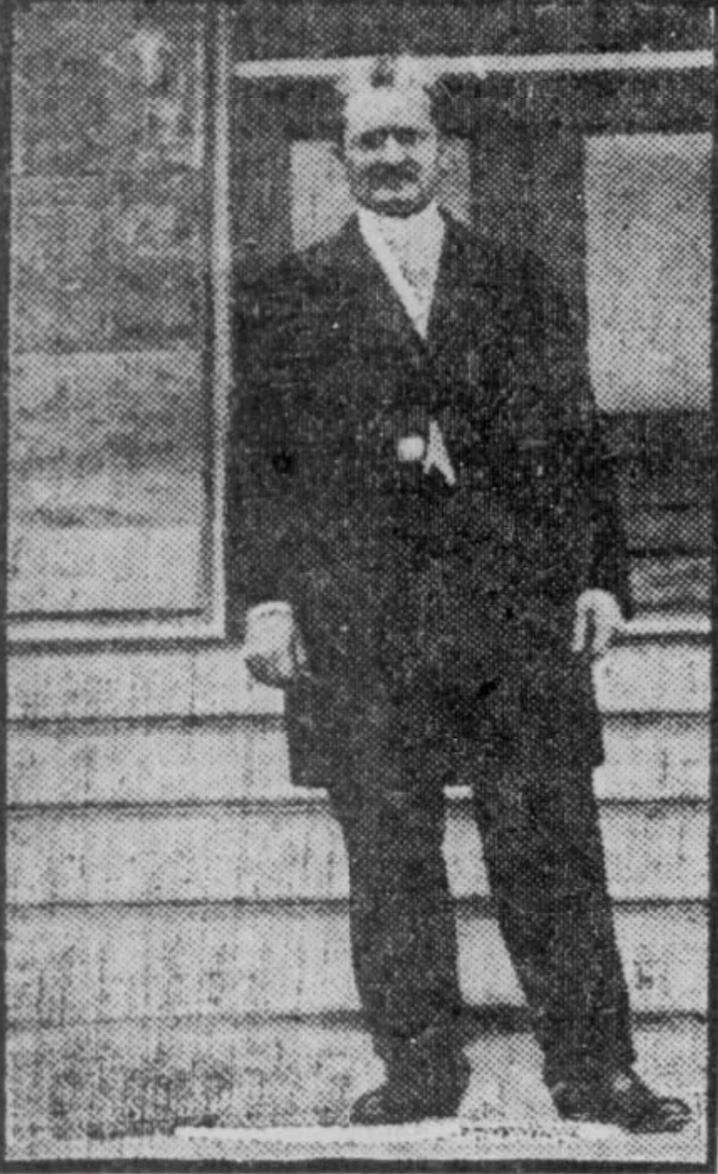
O.P. Christian
The Bingham County News, a competing local newspaper eager to attack its rival, described Trego as a prominent citizen—President of the Eastern Idaho Press Club and an active Methodist Church member. He had posed, according to that paper, as a "very religious man," making known his sympathy for the girl's destitute condition "to excite the admiration of the residents of Bingham County for his charity." But the child painted a different picture of Trego, swearing in 1913, under oath, that Trego had been subjecting her to indignities for some time and that she consequently had returned to the Finding Society in Boise in order to avoid him. Immediately after her return, in early May of 1913, Trego was arrested for the purported infractions.
Trego explained the situation in terms far more benign than the girl, Nellie Ray, did. She had been at Sagehurst (his homestead) for three years, according to Trego, and had recently returned to Boise with field agent Kathryn Hummer to look for a farm situation there that would better suit her than Sagehurst had. Trego claimed she had been acting up, difficult to manage, and was obviously unhappy and that he and his wife wished to sever the relationship.
Nellie had told several parties in the prior weeks of her plight, convincingly enough that, with their combined corroborated force, Sheriff Jones and County Attorney Good believed there was enough evidence to arrest Trego. They sought Nellie Ray's return to Blackfoot to testify against him at a preliminary hearing, and once she arrived, the sheriff went to Sagehurst and arrested him. The judge immediately placed him under $5000 bond ($200,000 in today's money). It took Trego about fifteen phone calls to find three willing to act as his bondsmen and procure his freedom. The hearing was set for the next day, Saturday, at ten in the morning. It would be held in District Court to accommodate the sizable crowd.
Nellie testified for an hour during the hearing "without faltering," according to the BC News, vividly telling "of the revolting acts of the fiend in human form" and never being confused by the cross-examining attorney. She testified that in 1910, suffering from spinal trouble, she was told by Trego to get into bed with him and his wife, who left the bed later, in the night, claiming to be too hot. This occurred three separate times, Nellie testified, before Trego succeeded in accomplishing her ruin in November of 1912. Trego told her, she said, that this was "their secret" and she never related the events to Mrs. Trego. She did, though, finally tell her on April 26 of 1913, when she asked to return to the Children's Home in Boise. She also told Katherine Hummer, the field person for the home, who asked her not to say anything.
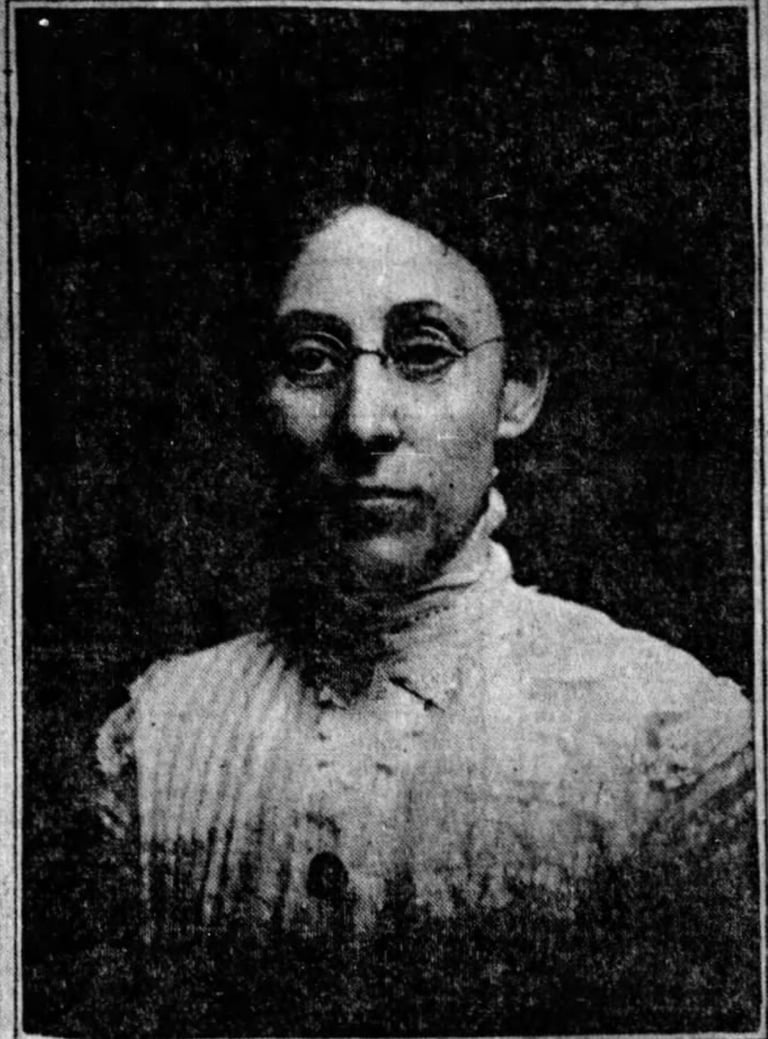
Hummer, pictured here, came to Idaho in February 1913 after serving as agent for the Industrial School for Girls in Iowa. Before her stint there, she had taught school, then been the principal at two separate schools in Iowa. She was acquainted with youth of all ages. The Industrial School would later be exposed for being prison-like, its girls sentenced to indeterminate terms that might last, if they were 'sentenced' at eleven, ten years, until they came of adult age. The windows were barred and the doors to the girls' rooms locked from the outside. Presumably, the Boise institution was less prison-like. Hummer would eventually testify, along with two Boise area teachers, favorably of Nellie's character.
Dr. F.W. Mitchell, who had examined Nellie, corroborated her "deflowering" story at the hearing and when the defense attorney—prompted by a whisper from Trego, according to the BC News—asked if sports or excess exercise might not have caused her to appear to have lost her virginity, he vehemently denied the possibility. "Not on your life!" he said. The defense attorney asked the remainder of the trial be held behind closed doors, given the sensitivity of the testimony but his request was refused. Three women then testified that Nellie had told each of them the same story.
Trego then took the stand in his defense, told of picking Nellie from forty-five girls, her arrival in Pocatello where he picked her up off the train. He admitted he and Nellie had slept together, but for the purpose of him placing his thumb on the base of her brain due to her nagging headache. Mrs. Trego, though wanting a boy, had given Byrd carte blanche permission to choose as he might and neither participated in the choosing nor was there to greet the girl when she arrived in southeast Idaho. Mrs. Trego, under oath, said she was careful not to let Nellie sleep with Byrd after she reached the age of womanhood.
Trego seemed "utterly shameless" and "mingle(d) with the people" after the hearing, was "hollow-eyed" and "required much drinking water" during the lengthy event, according to the BC News. The hearing produced enough evidence, the judge felt, to warrant a trial against Trego.
The trial, which took place June 6th, saw Nellie corroborating her hearing testimony. As in the hearing, Dr. Mitchell testified, then Byrd Trego and his wife. The two denied the possibility of 'accomplishing her ruin,' then besmirched her character—had she not been seen in the arms of a man on their porch in August of 1911? The 'man' was a thirteen year old boy, the prosecuting team revealed, ex-Mayor Capps' son, that testimony stunning the cross-examiner and making the audience smile.
The superintendent of the Home Finding Society, Dr. Christian, was called to refute the defense's assertion that Nellie had been a 'moral degenerate' since entering the Byrds' home. Christian suggested Byrd chose her for her innocence and purity and that upon being deflowered she would thus suffer the most shame and so keep it secret.
The Tregos testified to Nellie's sassy demeanor and general disobedience and incorrigibility. She kicked around at school until noon rather than having a meal prepared for Trego at home. She didn't fix supper. Rather than staying home and playing piano Nellie would go down town and buy candy or chewing gum. She was asked to fetch some embroidery silk for Mrs. Trego, who was bedridden, and spent too much time downtown before she returned. They portrayed her as "a girll of low, depraved instincts" "a designing, artful woman" and "absolutely incorrigible." The Tregos were appalled that she sang ragtime, and they felt they had to smooth out that rough edge—and others. The BC News characterized Trego as acting like a spurned benefactor, judging his sobs as "pretty coarse" and resembling more "a spear grass wether from whose eyes exuded a...diseased substance."
A Boise teacher, when Nellie was eleven, was called by the defense to establish Nellie's bad reputation, but Nellie could not recall ever seeing the teacher and the testimony was thus stricken. Trego's team then called a witness who testified that in 1913, on a cold February night, Nellie had come to the picture show clad only in a green dress and no head covering. She had left the show partway through and returned three-quarters of an hour later, stopping to look in a mirror. She then fixed her disheveled hair, straightened her dress and brushed 'weeds and dirt off her back.' The prosecuting attorney's witnesses disputed that account, having seen her in front of the Isis (the local theatre) amply covered and undisheveled.
The defense then called Alice Beach, who had roomed with the Tregos during Nellie's stay at Sagehurst, but when she testified of possible improprieties by Trego the defense attorney stopped proceedings. He accused her of giving different testimony than that she had given him privately before the trial.
The defense' closing argument took ninety minutes and the prosecutor's took four hours. The jury, comprised of twelve fathers, debated from nine PM to ten the next morning. When their guilty verdict was read, Trego stalked out of court, mounted his bicycle and rode home. He faced five years to life in prison.
Trego used his own paper, The Idaho Republican, to claim injustice, that he was "convicted by prejudice" and people were "worked up to a high pitch by (his) personal enemies" who wished to "inflame the public mind." That conspiracy influenced the trial results and he vowed to fight on. Less than a month later, in July, he was sentenced to 5-25 years in prison and he immediately gave notice of appeal.
Eight months later, in March of 1914, his appeal to the Idaho Supreme Court was heard and his guilty verdict was overturned. Trego, silent for almost ten months at his lawyers' urging, immediately used his newspaper to restore his reputation and mount an exhaustively extensive rebuttal to the charges, a task that spanned weeks, numerous pages and tens of thousands of words that spared no one who had slighted him in the least. The headline of his initial rebuttal began: "Trego's enemies start a scandal. One preacher begins prosecution. Another plays the part of a moral coward. Businessmen show lack of courage and independence. Community goes crazy and demands immediate imprisonment. Ladies of Aid society aid in establishing known falsehood." He would expand on the themes throughout the spring and into summer.
Trego described the first months of Nellie's life with them as her being "happy and contented" but she had become hard to govern so they asked the orphans' home to take her back. When the date was fixed to do so, Nellie became even more difficult and the Tregos then demanded her immediate removal. About the time she reached Boise, a telegram from Trego's enemies had reached the Home and an investigation into Nellie's accusations was demanded. Nellie then, according to Trego, recanted the tales she had to his enemies but then changed her story again after that, asserting their truth, which resulted in his arrest and prosecution.
The Supreme Court determined that, given this shaky back-and-forth nature of Nellie's account, the case's evidence was insufficient for Trego's conviction. The Court said Nellie was trying to get even with the Tregos for barring her from dances, that Superintendent of the Children's Home was overzealous and wrongly harmed Trego, and that County Superintendent Alice Beach inflated her story to convict Trego. The Court also ruled that the trial judge should have stricken testimony regarding Nellie's good character as the witnesses had no knowledge of it. Given all these mishandlings of the trial, "the Court (was) warranted in assuming that the jury must have rendered the verdict under the influence of passion and prejudice."
Trego lengthily disparaged a list of enemies, neighbors, acquaintances, and others throughout the months following the Supreme Court decision. He attacked his Linotype operator. He smeared the County probation officer, suggesting she had induced Nellie to wear a warm coat on the witness stand in order to increase her discomfort, thus making her more emotional and weak so she could affect fainting spells—which the officer went so far as to bring smelling salts to revive her. He went on to list other efforts to craftily coach the testimony: when Nellie sat at the witness stand she feigned weakness in the lower back when, Trego said, the base of the skull was where her affliction lay.
Trego lambasted County Superintendent Alice Beach, who was a 'warm friend' to them before the prosecution began. In the trial proceedings she said that the Trego's home was no place for a girl to live, as the Tregos were not good people. Trego responded by writing of her office's malpractice and inefficiency. He noted that his paper had withdrawn its support of her reelection, despite her friendship with them, and suggested that his lack of support caused her to retaliate by using the trial. Beach had testified she saw Trego kneeling at Nellie's bedside and kissing her (when Beach was rooming there), and that she on other occasions had heard Trego in Nellie's room. Once, she waited at the door for an hour for Trego to emerge but he never did. Trego responded: if indeed she witnessed impropriety why did she continue to stay at Sagehurst? He further impugned her character by painting her as a nosy roomer trying to catch him in a fictitious, villainous act.
Trego's neighbor had testified that Nellie told her she hated Trego. His answer: why then did Nellie take every gift and keepsake the Tregos had given her? He then went on to further smear the neighbor's character.
Trego lambasted the Superintendent of the Boise Home, Reverend O.P. Christian, saying he had strong peculiarities unfitting for his position. He was deceitful, lacking in common honesty. Trego said that in pre-trial doings Christian had noted that Nellie's family was 'of family stock that breeds trouble' and that the Tregos were doing the best job anyone could. A sister of Nellie's had proven to be trouble elsewhere, and her mother was living with a man in sin. Under testimony, Christian had been asked of Sagehurst and he said it was the best possible position found for any girl he had placed from the home. Trego wrote that every time he wished to return the girl, Christian implored him to keep her, to try a bit longer, portraying himself as a victim of mischaracterization.
Trego claimed Christian, pretending to be the Tregos' friend, had been working against them by raising money—five hundred dollars—to hire an additional prosecutor to aid the County against him and directing his field agent to presume his guilt. He said Christian lied under oath when he said Trego had never talked to him about taking Nellie off his hands. He suggested that Christian was fishing for community support for the orphans' home when he testified of Nellie's high character and lied when he said she earned the nickname of 'lily of the home"—his testimony insinuating that any bad behavior from Nellie was instigated by influence from the Tregos. Christian's character, it turns out, may have been aptly appraised by Trego, for he left his wife and eloped with another woman and later was disbarred from preaching in the Methodist churches.
Throughout his season-long diatribe, Trego likened himself to a gladiator after a bout with the stadium spectators flashing 'thumbs down'. When the verdict was read, the citizenry was merry and congratulatory amidst themselves—and Trego, the wronged hero, apparently gloated when his fortunes were turned by the Supreme Court decision.
Trego angrily noted that almost Immediately after the initial verdict was read Cooke, a competitor, much like a property vulture at a funeral, approached him to buy out his newspaper. He showed him contracts forward he had established from advertisers for the coming year. Cooke had canvassed businessmen and he told Trego they had said they would not be doing business with him from hereon. Trego, questioning what he had been told, contacted those same businessmen and claimed Cooke to be exaggerating, if not lying ,for most were supportive.
Trego wrote that Judge Stevens was in cahoots with E.A. Cooke, the Shelley Pioneer publisher, that they had bought a 'plant' in Pocatello that would be moved to Blackfoot to start a new paper, seizing on Trego's situation. Additionally, Cooke lured Trego's help away. His linotype operator left to work with him. Then the office boy and apprentice joined him, leaving him just one man in the enterprise.
He lamented. The jury's verdict had "taken him of his citizenship; branded him as a convict; destroyed his standing; ruined his business; crushed his relatives; left his wife an outcast, and that about twenty of his 'friends' had been named as states' witnesses—solidifying his status as victim. How had this happened? Well, as an illustration, a juror, according to Trego, had been asked how he found Trego guilty when the accuser was obviously lying, He responded that "of course we knew she was lying about the time of occurrence" but "we figgered that it might have happened at some other time." Trego attacked the juror and his logic in the paper, though he refrained from naming his name. Later, he would publish all the jurors, aiming to publicly shame them for their decision.
There was yet more victimry: neighbors had tried to cut off the water to his farm; another bunch tried to get the City Council to withdraw the Idaho Republican's status as official town newspaper; others were tying up advertising business elsewhere and trying to get him to sell paper at 'excursion' rates. They were trying to get ways to cut off his income, make him unable to pay his mortgage so Sagehurst could go into others' hands. They had even 'picked their man' to take it over. A bunch of women in town had been "hammering at his bondsmen' so he would have to sit the summer of his conviction in jail.
After that conviction, according to Trego's words in his paper, Rev. C.A. Edwards, the former Methodist minister in Blackfoot, wrote to O.P. Christian, congratulating him for convicting Trego, Christian then sent this letter to Judge Stevens before sentencing. Trego insinuated that the accusations against Trego in the letter dramatically influenced his sentencing, then explained why Edwards didn't like him and had become an enemy: he and Edwards had been at odds during Blackfoot's Diamond Jubilee, Edwards using the Idaho Republican as a mouthpiece to spread misinformation that suggested a large throng of churchmembers on their way to the national convention in Seattle were going to stop at Blackfoot—they didn't. Additionally, Trego said, Edwards would not give an itemized expense list for the hundred dollars given him for managing the speakers at the Jubilee. the committee didn't know if he paid speakers or kept the money. Trego detailed other transgressions, leaving little complaint out. Thus, Edwards became Trego's enemy and his vendetta was played out in the Trego drama—according to Trego.
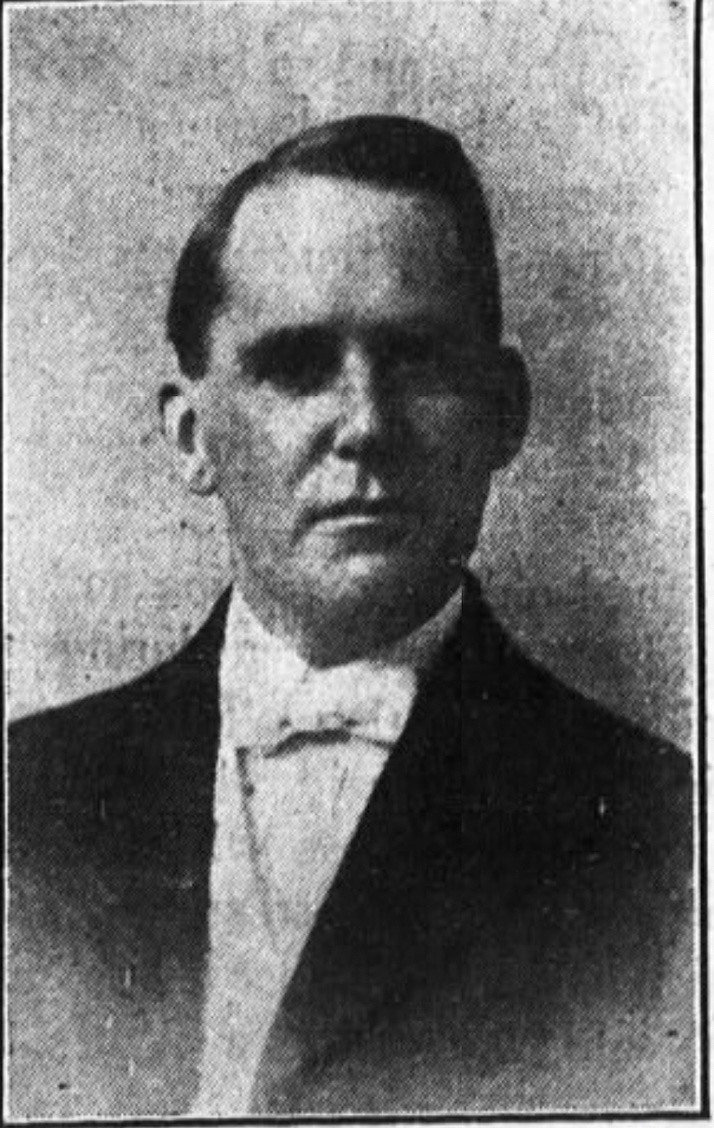
He wrote that the Methodists were the ones pushing for his arrest, that Reverend Barnstable (pictured above) distanced himself from him, that Sheriff Jones, upon Methodist instigation, went to Boise to fact find, was told by the prosecutor there that he had no case, but he nonetheless brought Nellie to Blackfoot, consulted with the prosecutor, and went ahead with the arrest. Jones was told Trego was in hiding, in Trego's published version of events, ready to escape on the evening train, but in reality he was in the kitchen with his wife 'tinkering with flower pots.' He was further wronged at the courthouse, he claimed, saying he was closely followed lest he 'break and run' or 'kill himself'—his portrayal of his enemies, the 'conspiracy of 23', gave them a paranoid, vindictive cast.
The Idaho Statesman—wrongly, Trego wrote—printed that the Trego home had to be guarded to protect him from violence after the hearing. He told his readership that Judge Stevens met with him early in the ordeal and joked that most similar cases went away when a few hundred dollars passed hands. Unable to stem his vengeance-filled wrath, Trego went on to detail those who snubbed him during his troubled time: the county surveyor, those who owed him small amounts of money, the gossiping women who avoided his wife, prominent church ladies who were once friends, Reverend Barnstable despite his ongoing help with the Church, those who abused his bondsmen for their kind act, and especially the young schoolteacher he had befriended and helped that shunned him after his conviction. He pointed out that it had cost him and wife $5150 to raise her for three years when it was suggested that they had her wearing rags.
In June, one of his 'enemies' stood up to him and he was charged with libel for his printed words against Alice Beach. He paid a five hundred dollar bond to evade jail while waiting for the trial, shamelessly publishing the names of seventy-two businessmen and other prominent citizens who signed a four foot long document providing the bail. At the trial, Trego's lawyer asked Beach if anything he said was in conflict with what the Supreme Court justices themselves had said. And, he added, have you brought suit against those justices?
Trego was given a change of venue to retry both his original assault case and the Beach case, given that he couldn't get a fair trial locally, and Twin Falls prosecutor Ralph Adair moved to dismiss the affair completely on grounds many witnesses had left the state, hence a conviction upon new trial could never be obtained. The complainant, Nellie Ray, couldn't be located, and the Superintendent of the Finding Society refused to give out her address. Judge Babcock concurred and dismissed the Beach case, as well, suggesting it to be more proper for a civil suit rather than, as he put it, publicly venting Beach's spleen against Trego.
So the long drama was at last over—at least the public version of it. A Lewiston paper editorialized upon the entire ordeal, sympathizing with Trego as wrongly accused (possibly) but denouncing him for slandering and chastising neighbors and fellows mercilessly in the paper after the Supreme Court overrule. No one came out of the exercise unblemished and unscathed. Given the vitriolic and sensational nature of the year long public display, however, one might surmise that circulation numbers rose dramatically, readers eager to see the salacious details behind a heinous act (or heinous false accusation).
Though Trego had thoroughly taken all comers to the woodshed, his feistiness and anger would continue in the coming months. He entered a street brawl with a man named Byers, getting a broken hand. Having his own pulpit through his newspaper, he excoriated law enforcement for dealing with Byers better than they would have him. He fought another man, John Ireland of Howe, in front of the Club Cigar Store, using a blackjack. Ireland was charged with battery and found guilty (on appeal, the charge was overturned), Trego was told he could carry a weapon to protect himself. He had to be escorted for the courthouse for getting into a skirmish with the Sheriff in December of 1914. He verbally attacked the city attorney the following April. And he eventually struck back at the lone Supreme Court justice who voted against him, publicly denouncing him in a thorough manner in order to quash his bid for the Senate seat.
Trego edited the Idaho Republican until 1927 and continued on, after its merger with the Evening Bulletin to become the Daily Bulletin, until 1939.