HOW THE EARLY BINGHAM COUNTY CATTLEMAN TRACE BACK TO OGALLALA
WILLIAM BURKE, EARLY BINGHAM COUNTY CATTLEMAN
4/15/20267 min read
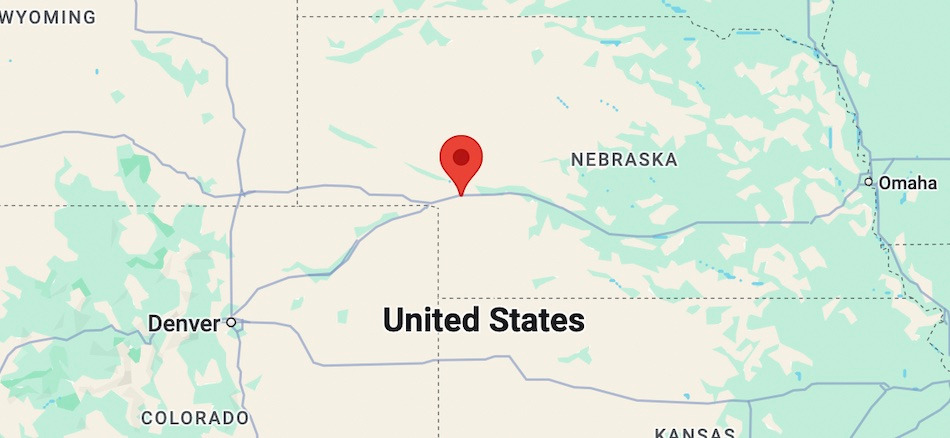
When William Burke bought out Jot Travis' operation in the mid 1880s, Idaho's cowboy era was at its peak. As one of the last open range areas in the West, southern Idaho echoed a time already passed in the Midwest, a time without fence-necessitating herd laws, without the settlers who insisted on them, and having minimal competition from sheep and fellow cattle raisers. Burke must have especially understood what was coming, as his partner Simon Lonergan, was the son of Phil Lonergan who, with his brother Thomas, turned the town of Ogallala, Nebraska (see map above) from a train stop with a population of twenty-five in 1873 into the foremost Midwest cowtown for nearly a decade.
London journalist Edwin Curley described Ogallala as having "half a dozen buildings...two eating houses...no lodging...and...two bachelor brothers (the Lonergans) who (split) the offices of Probate Judge, Postmaster, and general storekeepers." They owned two or three hundred cattle and did some butchering. In 1875, Union Pacific built a cattle pen and loading chute near the town and Phil Lonergan supervised the yards. In an interview with Lonergan that was published in the Chicago Tribune and elsewhere, Thomas detailed the promise of the cattle industry at the time with facts and figures that assured profit for those willing to invest and Curley's large readership responded by pouring in investments. Ogallala was poised to become a major shipping point, being 300 miles north of infamous Dodge City and a handy endpoint for cattle shippers and drivers. Lonergan's cattle manual, publicized by Curley, suggested that winter grazing, even through foot deep snow, made ranching feasible and profitable throughout the West.
Lonergan estimated that already, with the Chisholm Trail no longer an easily traversed route, Ogallala was seeing 11,000 head of longhorns coming through on their way to Idaho grazing lands, with another ten thousand heading to California, nine thousand to Wyoming, eight thousand to Utah, the same to Nevada, and twenty thousand to Montana. Those numbers would rise, spurred at first by the Black Hills Gold Rush of 1876-1877, the prospectors there willing to pay almost any price for cattle—some herds went for $100 to $125 a head, five and six times the market price.
It was a perfect storm of sorts for Ogallala, with the cattle routes from Texas impeded by farmers and thus entailing alternate paths, and the 'Indian Problem' taken care of through the completion of the Reservation system. From 1875-1885, Ogallala would see a hundred thousand cattle come through each year from mid-June, when the first Texas herds appeared, through the end of August, with business picking up in October when livestock was coming back to be sold and transported to meat packing plants and eastern markets.
The success continued for a decade before quarantine laws came into effect in 1884, Texas fever plaguing the industry by decimating herds and reaching Ogallala. Cattlemen in disease-free areas in the north and west demanded a halt to the movement of southern cattle. Ogallala's population maxed out at seven hundred at that time and diminished after the quarantine slowed livestock arrivals to a trickle. Phil Lonergan's son Simon, no doubt witness to Ogallala's heyday and part of the cattle expansion westward, would soon be partnered up with William Burke in Utah and Idaho.
Thus, when Jot Travis sold his extensive cattle operation, which included grazing on the entire west side of the Snake River from American Falls to Blackfoot (so it was said) and a more verifiable ranch ten miles from American Falls, to William Burke in the mid-1880s, the transfer was another link in a chain that stretched to Ogallala fifteen years prior.
Burke, born in Ireland in 1837, was an early Chicago pioneer, and came to the West about 1870. His association with Lonergan already extant, he moved to Salt Lake in 1884, "cupid the moving impulse." Lonergan established a Salt Lake meat market and very soon, twenty prize Burke and Lonergan cattle were seen moving through the streets to their final stop just prior to Christmas in 1886. Those animals were four years old and weighed 1650 pounds apiece—quite a different sale age and weight than that occurring today.
A report from Burke to a Butte, Montana reporter listed the big cattle interests in south Idaho at the time, suggesting that the range Burke, and Travis before him, grazed was not solely theirs, as local lore would have it, but shared. The Rand company was feeding 4,000 head, Thomas Sparks was wintering 3,000, Armour Cattle had 1500, the Keough Brothers in the Raft River area ran 4,000, Gwin and Ocarce 4,000 each (the two names are likely misspelled), and J.W. Keeney ran a large number. George Emery, a Raft River rancher, ranged his cattle at least to southeast of what is now Springfield, as the first government surveyor in 1888 noted an encounter with him at his homestead there.
In May of 1891—a month later than normal—Burke was reportedly pasturing 4000 head, some north of Soda Springs and the rest in the Camas Prairie area, He was one of the parties whose cattle were stolen in perhaps the biggest Idaho rustling heist in history about then, eighteen train cars filled with stolen animals being intercepted in the Boise area on their way to a Seattle stockyard. More bad news came later that year when tax assessors (The County Board of Equalization) decided to ding the large cattlemen. Burke was assessed $18,500 (equivalent to nearly a million dollars today), the Warbonnet Ranch $30,000, and Blackfoot Land and Stock $35,000. The governmental decision may have spurred those cattlemen to establish a cattleman's organization, The Idaho Stock Association.
Burke expanded his herd in 1897, buying O.P. Johnson's five thousand head, which had ranged in the Shoshone area, for about twenty dollars a head. Johnson may have been encountering an overcrowded range, given that, according to a reporter who listed other grazers' and their brands, there was an ample number of cattle in the area: Dan McGinnis's 'circles', Johnson's 'rails', Young and Wilsons 'Y's' and 'FF's', Blackman's 'E's', along with 'Hutch's herd of crackajacks'. The purchase may have been a strain for Burke's finances, as Burke Land and Cattle went into receivership just a couple months later.
As might be expected in a time when and place where legal precedents had yet to be established and economic boundaries still were murky, Burke found himself in a courtroom often enough that he must have felt comfortable in such surroundings. He had his partner Simon Lonergan had been sued by Simon's uncle Thomas regarding a 1888 deal in which he purportedly misrepresented the worth of their jointly owned property, and when selling Thomas' fourth interest had underpaid him by nearly $40,000. Simon admitted that between the times of the agreement with his uncle and the sale of the property he had negotiated a higher price but he denied that the difference was due his uncle. The suit dragged on for four years, in part due to the original judge dying during that time.
A later suit pitted Lonergan and Burke against the Promontory Stock Ranch Company of Utah, its owners hailing from California—the legal battle eventually played out in the United States Supreme Court. Promontory claimed that Burke and Lonergan didn't live up to their contract to sell their ranges and over two thousand animals, insisting that they bought, by contract, two year and older old animals but that 422 yearlings were substituted.
Matthew Mullen, who put up the bond for Lonergan in the suit, later sued in 1897 for the bond money, which hadn't been returned to him. Lonergan had an unusual defense: he had met a woman in the early eighties, proposed to her by promising a sum of money to make her independent. Mullen's attorneys argued that such a defense was insufficient and that the $32,000 Lonergan provided the woman was in part Mullen's money. Months later, Lonergan filed for bankruptcy.
In a less dramatic case, Burke, along with H.B. Garletz and D.A. Banks, sued the Oregon Short Line for killing sixty cattle in a 1898 train incident. He also fought Wells Fargo, which sued him for $65,000, in 1899, winning a favorable judgment that lowered his bill to $13,000. He again sued the same bank in 1900 after having formed Burke Land and Cattle Company and transferring his land and stock to it, then transferring his holdings to Wells Fargo as security for his indebtedness to them. The shell company tactic seen today, apparently, was going on even back then.
From time to time Burke checked in with the newspapers to give his assessment of the cattle trade. In 1901, word leaked out of a ten thousand head sale of Burke's and John Sparks' herds to a man named Parsons. A year later, he publicly reflected that cattlemen would have to invest in sheep—just years ago, he was quoted as saying, there were just ten thousand in his vicinity and there were twenty times that now. He accused packers two years later of driving down prices—an argument commonly heard to this day—, halving the $25 a head of earlier times due to collusion between the "Big Four" national packers.
Burke had for some time promoted an electrical plant at American Falls and in 1904 his idea came to fruition when the American Falls Electric Co. was formed with a million dollars in capital stock. The electrical generation was expected to produce six thousand horsepower, two thousand used for two Worthington centrifugal pumps to lift water to a canal to the west side for an irrigation canal covering four thousand acres. A dam was planned five miles downstream for more generation.
Burke sold his hotel and ranch on the west side of river in 1908, the once-promoted move of American Falls townsite to his property never taking shape and the hotel never being successful. The town would eventually be moved to the other side of the river, however, when a dam and reservoir were built eighteen years later. He became president of the Idaho Stock Ranchers' Association before moving to Portland, where he became instrumental, with his sons, in the operation of the nationally known Portland Union Stock Yards.
Burke faced a tragic episode in his later life at those Stock Yards when his thirty-two year old son Maurice, a buyer for the entity, committed suicide in 1912 by drinking an eight ounce bottle of carbolic acid. In his suicide note he deemed himself a failure but said "I blame no one but myself...I am better off to everyone dead." He also left a last letter to a woman, its contents unknown, its seal unbroken, at the time of the newspaper report.
Burke died in 1919.