Ida Rainey, Census Taker
Ida and Joe Rainey
7/8/20262 min read
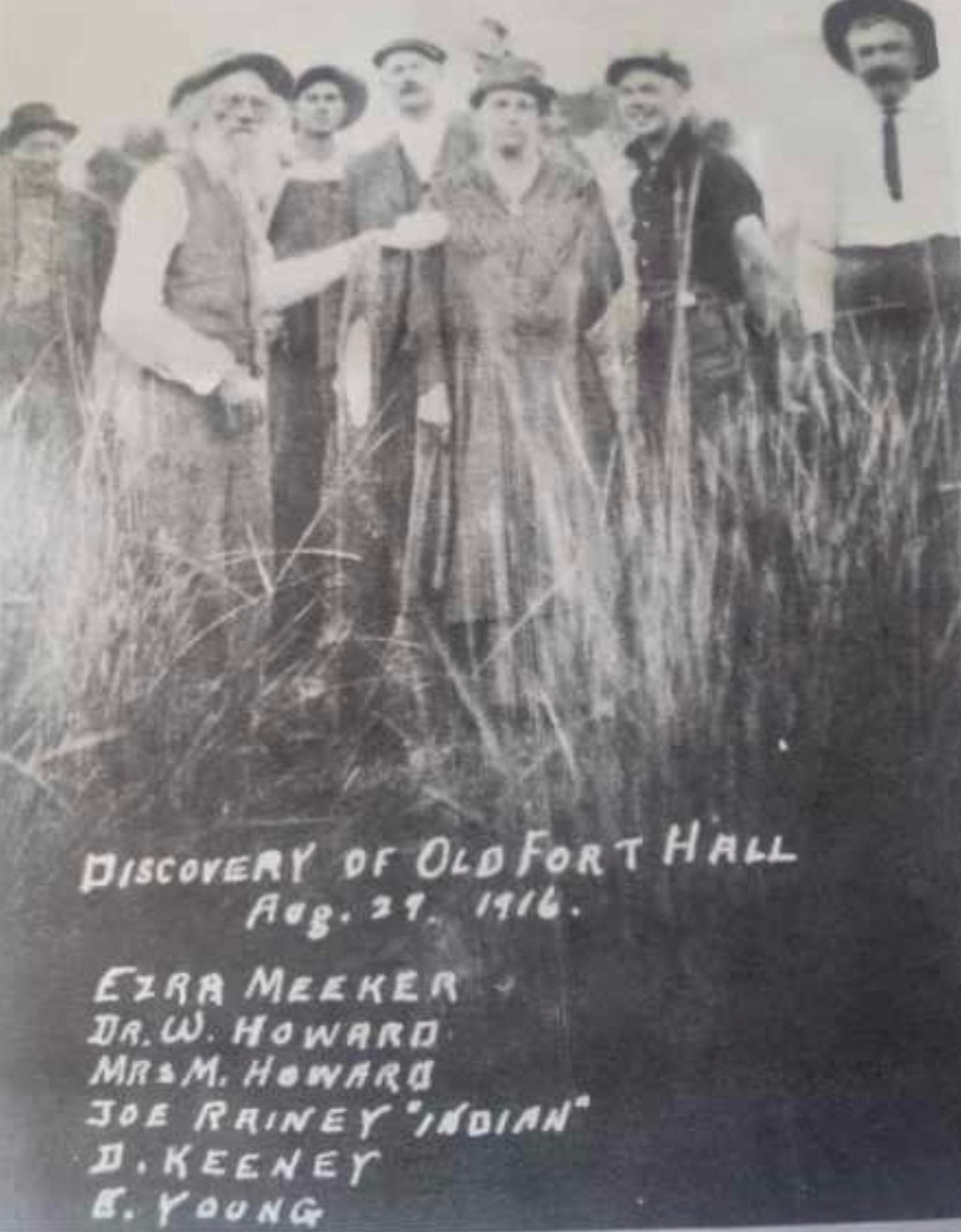
Finding a suitable census taker for the Fort Hall Indian Reservation in 1910 might seem a difficult task, given that most Natives residing there still spoke Shoshone or Bannock, but luckily eighteen year old Ida Rainey stepped in to take the job. Her age might have seemed suspect had her father not been the well-respected Native who had worked with the US government for decades as a scout, surveyor and Agent. Joseph Rainey spoke French, Nez Perce, Bannock, Shoshone, Chinook, and Flathead, fought with General Custer as well as in the Nez Perce war under General Howard. He served as interpreter for several Fort Hall treaties and on the movie set of "The Covered Wagon" (read about it in 'The Great Pasture')—the third highest grossing film of 1923—in which over a hundred Fort Hall Natives were extras. Given her background, Ida probably could turn to her father for help at any time had she needed it.
What did her enumeration uncover? About eight percent of the Native population were of mixed heritage: Mandan and white; Piegan and Chippewa; Cherokee and Delaware; Delaware and a Cherokee offshoot (mis) spelled 'Wadguki' by Ida; Cherokee and white; Piegan and white; Cherokee/white/Piegan/Mexican; Wylacki (Northern California tribe) and Shoshone.
About a quarter of the tribe could read and write English. A few had graduated from schools, a rarity at the time—the new Fort Hall School had only been in operation for a few years though a boarding school that focussed on technical skills rather than the three r's had been in operation for decades (you can read a full deep dive into the school's history in 'The Shanghi Plain'). Three residents had graduated from the Chemawa School in Oregon; one from Indiana's Commercial College; three from Haskell Institute in Laurence, Kansas; four from Lemhi Indian in Idaho; one from public school in Idaho Falls; three from Green River public schools; one from New York's Rochester High School; one from Phoenix Indian School; two from Carlisle in Pennsylvania; one from the Idaho Academy (now ISU in Pocatello); five from Ross Fork public school, three from Fort Shaw in Montana; and one from Klamath Indian School.
Rainey, as directed, also counted the residents' dwelling types, the census form allowing for two kinds: aboriginal and civilized. Almost half lived in aboriginal structures, presumable tepees—397 of 843.
The Reservation administrators and bureaucrats also were counted: the Haygood family from Georgia. William Pyke, a Canadian merchant. Frank Nelson, the Tribe's Cattle Head from Virginia. Walter Davis, the Railroad Agent from Missouri. Ohio's Andrew Stevens, section boss. Henry Selck, brakeman for the railroad. Henry Wheeler, Illinois physician. There were teachers, carpenters, laborers, a clergyman and missionary, an irrigation specialist from Kansas, a draftsman, surveyors, a time keeper (any guesses as to what that function was?), stenographers, blacksmiths, farmers, two cooks (one of them Japanese), and 23 teamsters—the horse was still the mainstay of civilization's mobility at the time. 103 people in total lived on the Reservation to administer the Indian Bureau.
Ida Rainey's work covered only the Bingham County portion of the Reservation. Bannock County administered its own census for the Snake River Bottoms and Ross Fork. Ida would marry Robert Hayball two years later, in 1912.
In the photo, Rainey is to the far left.