JOHN ENGLAND, A MAIN IMPETUS FOR THE PEOPLES CANAL
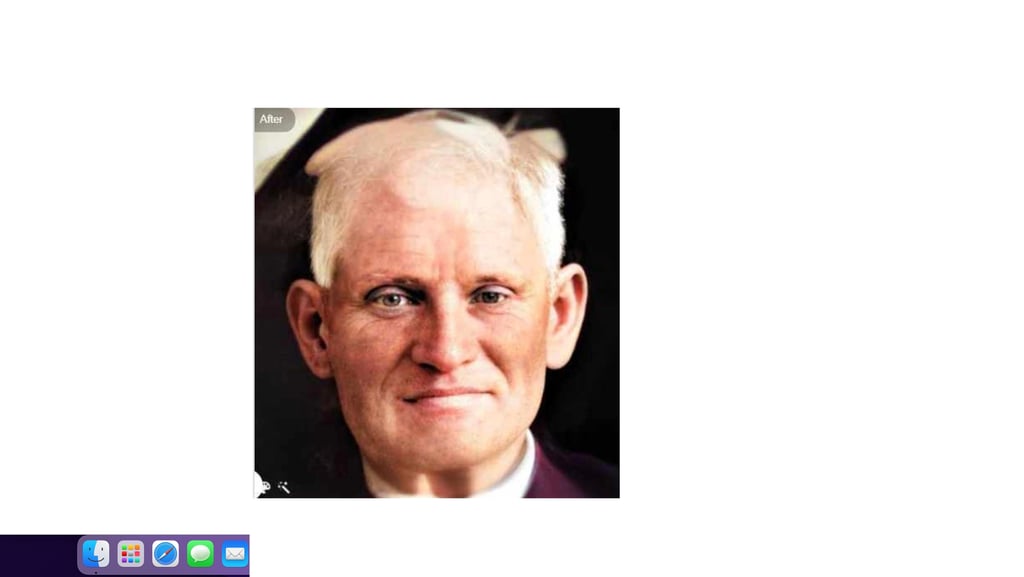
John England made his way from England to Utah in part as a worker for the Transcontinental Telegraph
1/17/202615 min read
The shadow war between the LDS faith and a secular American population, while supposedly finished in a legal and political sense, continued on in the minds of settlers throughout the latter half of the nineteenth century. Brigham Young's expansion of empire, thwarted by California's statehood, took on a different look after his death in the mid 1870's. Interaction with the telegraph, then the railroad, opened the flow of information into the Intermountain West and well as letting it out, and the purity and cloisteredness of the LDS population softened somewhat. But any proselytizing religion—or for that matter, any organization or corporation seeking a wider audience—inherently aims for greater control and broader existence, and the Mormons' avid missionary activity, emigration policy, and high birth rate (5.0 compared to 3.5 for the US as a whole) posed a social and political threat to those not of the faith.
Southeast Idaho looked promising as a place to expand for Cache Valley Mormons, on a map appearing as the logical next step in passive colonization, a slice of land, situated between LDS strongholds both north and south. Cache Valley residents especially eyed its farmland, for the offspring of initial Mormon emigrants, so numerous, needed places of their own. The Church's implicit backing of the Peoples Canal provided them with a gentle nudge and an omnipresent security which unaffiliated settlers lacked.
When John England came to the area, there were already a few claimants present—claim records suggest that non-Mormons (those not appearing on the fastidiously kept LDS records) had filed on roughly seven thousand acres of the land that the Peoples would eventually cover. But there were LDS claimants, too. Ola Liljenquist, a first generation Scandinavian and a polygamist, had filed with the Desert Land Act—his son Charles would be the first Peoples Canal President. Christian Christiansen, son of a Scandinavian emigrant (a polygamist) had acquired his farm in an advantageously placed spot—the 'Twin Bridges' area a mile north of the Snake River High School where both the Peoples and the American Falls canals would necessarily flow through. Herb Brown, son of an early Mormon emigrant who for a time braved the Plains solo rather than with a group, had purchased his property from an even earlier claimant. Hans P. Christiansen, born in Denmark and son of the same polygamist father as Christian, came across the plains as a two year old. He would be an early Peoples board member and hold the position of Bishop of the Moreland LDS Ward, which was the stronghold of the Peoples Canal, its central command spot.
The list of emigrants and emigrant offspring in the area would grow with the building of the canals. Many, if not most, of the Peoples' claimants bore British and Scandinavian names: Brown, Spencer, Smith, Stander; Ingebretson, Feljsted, Swendsen, Petersen, Anderson, Ericson, Christiansen. No wonder, the proselytizing efforts of the LDS Church had been aimed at the British Isles and Scandinavia since very early in its history, with more English members than American at one time. Church founder Joseph Smith had established recruitment in England, where there were just 1000 followers, by 1840,1 and once Brigham Young and six of the Quorum of Twelve arrived in the isles to preach, the numbers quickly swelled to 7000 in 1842. By 1847 there were 26 conferences with 250 branches and in 1860, 11 districts and 34 conferences. 1851 saw the Isles' peak membership reach 33,000, after which emigration caused numbers to shrink to less than 3000 British members in 1890.2
The LDS message and religious fervor drew British converts, but the gateway factor for its acceptance was economic—the rise of the Steam Era and the consequent rapid technological and societal change. Tremendous rural to urban dislocation was occurring, resulting in status disruption for millions of British people.3 LDS missionaries, using that socio-economic dissonance, sometimes inflated the dream of Zion, where "vegetation flourished with magical rapidity," to provide a stark comparison to the industrializing, impoverishing cities of Britain.
The Church could back some of those missionary claims, having enacted its own land laws that made acquiring acreage easy and cheap for its followers. The Salt Lake valleys could hold millions, spokesmen told potential converts, and Zion needed laborers badly to build up the burgeoning empire. Brigham Young stated that a man need spend no more than a fifth of his wages, could buy the family's food for a week with a day's pay. The oppression of the rich upon the poor was absent in Utah, listeners were told.4 Utah's Jedediah Grant complained about these lofty exhortations. The emigrants, he said, "Suppose all our pigs come ready cooked with knives and forks in them."
Emigration began in 1840, but less than a thousand converts crossed the Atlantic the next three years and no more than 1600 a year for the following decade5. But the flow of Saints increased and by 1855 emigration had reached three thousand annually.6 It is estimated that 50,000 Mormons, not all of them foreigners, had reached Utah by 1850, triple that a quarter century later.7 Ten thousand Brits were in Utah in 1860, twenty thousand a decade later, (p 96) and Scandinavians reached Utah in numbers roughly half of that. By 1890, ninety thousand Mormon emigrants from overseas crowded the Great Basin.
The first emigrant generation's fervor, fueled by the imminent end times predicted in the 1850s during the Mormon Reformation, which promised a Zion immediately at hand, may have been diluted somewhat by the time the Peoples Canal was being built. But, just as children of those who suffered the Depression often embody their parents' learned habits, fears and attitudes, the Mormons who came to the Peoples area no doubt maintained their parents' sense of their Church's equivalent to Manifest Destiny. Their will was the Lord's and the land was rightfully theirs.
***
Travel writers frequently describe past experiences in a way that changes the character of the actual events. Painful, frightening moments, upon reflection, become an entertaining 'story'—often humorous, usually inflated, always omitting extraneous details that detract from the proper arc of a tale. LDS emigrants' accounts needed no such alteration, significant as their experiences were, but many carry a religious overtone of miracle and revelation impossible to assess as either truthful or false, as pumped-up drama by the self-important or downplayed (rarely) by the self-effacing.
Nonetheless, stripped of those embellishments, the journeys from overseas still strike a reader as remarkable. For the British, five or six weeks aboard cramped ships, a week taking many trains to the westward excursion point (or, in the early days, a long steamship journey from New Orleans to Council Bluffs or Keokuk), then three months in the fickle weather of the Great Plains suffering hunger, weariness, and both minor and major hardships. And for the Scandinavians, an even longer trip that could take nine months: first, shipboard to Germany, then a transfer to another ship to Hull in England, a train trip from there to Liverpool, then the same trip the British took from the U.S. coast to the midwest and then the long slog to Salt Lake by either wagon train or handcart.
LDS agents assembled supplies for the emigrants' trek, settling what otherwise would have been extreme confusion for a people unacquainted with the Plains' weather or a lengthy journey: 1600 pounds allowed for a two yoke team, 2500 for a four yoke. This included a half ton of flour; fifty pounds of sugar, bacon and rice, thirty pounds of beans, twenty-five pounds of salt; twenty pounds of dried fruit, five pounds of tea (apparently, the reach of the Word of Wisdom had yet to encompass that now forbidden drink); a gallon of vinegar and ten bars of soap. It was assumed that there would be ten people per wagon.8
Most Mormons joined fairly large groups of fellow members to make the journey. Of the 123 emigrant companies between 1848 and 1866 whose size is known, half had between 200 and 400 people, eight were smaller than a hundred and seventeen consisted of over 500 LDS members.9
Peoples Canal builder John England's route across the Plains, though, took a turn experienced by only seventy-five of his Mormon brethren in 1861. Together they made up a fifth of Edward Creighton's work force, a crew that built the transcontinental telegraph. Charles Brown's account of that work detail noted that the Mormon men were paid the least yet were 'the dearest'—most costly—of the laborers.11 Mostly urban dwellers, many had never seen an ox, much less attached one to a wagon, and their experience with the wild frontier was minimal at best. Nearly penniless, England took the job with Creighton's crew setting poles and stringing wire from Omaha to Utah.
John England was born in 1843 in Dorset, England and baptized at the age of ten. He left England for the United States at 18, sailing on the Manchester with a large group of other Mormon emigrants intending to reach Utah. As difficult as the trip was, it was likely a great deal better than that experienced by non-Mormons on many counts, as the LDS Church had commissioned entire ships and created a system of agents that eased the journey. At the docks and train stations along the way, LDS emigrants needn't face the swindlers others did, and in the ships their fare was likely better than that commonly provided, their general welfare more comfortable and less chaotic. Once the emigrants landed in New York, the Church organized trains to transport them from New York to departure, often ten to fifteen cars of Mormons heading west as a sole unit. The emigrants still had plenty to fret about but faced less worrisome conditions than non-LDS travelers who had to piece together all the pieces of a lengthy trip in a foreign country without any aid.
Finding employment with Creighton was no doubt fortunate for England—and simultaneously getting a trip across the Plains even moreso. Church leadership was helpful in the acquisition of Creighton's crew and Creighton, a Catholic, had met with Brigham Young a year prior to discuss a contract for delivery of poles for the telegraph line. He had made a preliminary survey of the cross country route—Creighton had experience building telegraph lines throughout Ohio and Missouri, and when the telegraph reached Omaha in 1860 he began considering a line to the West Coast. Shortly after meeting with Brigham Young, he was appointed the main contractor for the Salt Lake to Omaha segment.
Ax work, pole-trimming, digging holes a foot in diameter and five feet deep, driving teams, hanging wire—it took hundreds of mules and oxen to move the men and materials for the telegraph line. The line closely followed the stagecoach road, a stage station never further than ten miles away from a working crew. Sometimes, though, the men had to travel twenty miles to retrieve poles, trees being so scarce—approximately thirty or forty poles per mile were needed, twenty-seven thousand poles in all, one set of workers laying them out on the proposed line so those shoveling holes behind them could work without interruption. The line reached Salt Lake City in October, Creighton's trek taking just a month longer than that of other emigrants who left for the thousand mile journey at the same time.
England no doubt used the experience gained with Creighton's company for his later work, when he freighted government supplies from Salt Lake to Carson City, Nevada, and helped build the Plain City ditch—a handy precursor for his work on the Peoples Canal.
If John England serves as a prime example of the British who came to the Great Basin, a cohort on the Peoples project, its first President Charles Liljenquist, was representative of England's Scandinavian LDS brethren. Liljenquist's father, Ola, had successfully claimed his acreage north of what is now Moreland in 1895—as a claimant was allowed five years to "prove up" on the land, i.e. show that he had made improvements and farmed at least a portion of it, he may have filed in 1890. Sweden's relaxed religious laws of 1849 allowed Ola Liljenquist to join the LDS faith and he rose through the Church's ranks quickly. He held the title of burgher, which placed him above the rural peasantry and gave him privileges most lacked. His status was unusual among the LDS emigrants, who tended to be of lower rank—a sample list of over 8000 British emigrants showed that 4.85% were farmers (a third of the 11.4% middle class passengers); almost 15% were miners; metal and engineering workers made up 10% of the population; general laborers comprised 21%; 12% were textile and clothing workers.10
Ola Liljenquist served the LDS Church as President of the Copenhagen conference, as a burgher (illegally) signed for hundreds of LDS members to get their passports to leave for the U.S., then left Copenhagen in 1857 for Utah. Five years later he would leadi another emigrant company westward. He married a second wife that year, a third in 1874—the third came as somewhat of a surprise, his first two wives scouting for a spouse for their son but their 'mark' being more interested in Ola—voila, number three.
Liljenquist would be credited with building the town of Hyrum, Utah from "the stump up" and preserving it through seven straight years of grasshopper plagues that destroyed crops. He developed joint stock enterprises: road-building, ditch building, farming and dairy enterprises (88 families banded together to buy dairy equipment) , a mill, and a sheep herd, all of them cooperative ventures that in 1875 were joined together as The United Order of Hyrum. Hyrum became known as the "cooperative city." Liljenquist called the transformation of businesses into a communal venture the "building up Zion in the earth."12 Liljenquist's version of the Church's United Order may have been the most successful of the mostly failed communalistic ventures of the faith, perhaps partly due to the forcefulness of his personality—he was bishop for seventeen years and mayor for ten terms. It was to this substantial legacy that Charles E. grew up with, and was perhaps hard-pressed to follow, when he came to southeast Idaho and became President of the Peoples for a short time.
Liljenquist and other Scandinavians comprised sixteen percent of Utah's population in 1900, a result of 1361 missionaries' work. Farmers and their families made up a third of the Scandinavian immigrants, a much greater percentage than that of the English LDS. Most were able to pay for their own passage, so were better off than the British, though a third of the passage cost for 567 Scandinavians in 1869 came from Utah, a sudden cash flow arriving from railroad construction work—the anti-railroad stance of the Church, which earlier had wanted no outside interference or involvement, had softened.
The Church tolerated Scandinavians' use of their mother tongues for a while but encouraged them to learn English, even designing 'the Deseret alphabet' to aid them in that task. Purportedly able to represent every sound of every language, it harkened back to the time before the Tower of Babel, and hinted at the coming end times when all Saints would speak one language in the various heavens. The alphabet was short lived.
Some Scandinavians bridled at the Church's push toward assimilation, publishing their own newspapers and holding separate meetings—having a different language, the Scandinavians found separateness to be an obstacle initially impossible to overcome, so some embraced it. Eventually, though, the linguistic differences between English and Scandinavian speakers blurred and social ostracism followed suit, the flock becoming as one.13
There were other emigrant stories worth telling, hundreds of them: that of John Martin, on the first Peoples board, for instance. His father was a Scottish chimney sweep who joined the Church, made the trek to the U.S. and while coming across the Plains contracted smallpox and typhoid fever but evaded the cholera that killed forty percent of his Mormon company14 Martin's father was a member of the territorial militia that was formed to defend Deseret against the U.S. government.
There was the story of Herbert Daniels Brown, credited by John England as being a member of the small team of men that cut the first furrow that would define the Peoples Canal path. He came to Bingham County in 1894, bought land from a rancher who was breaking up his large acreage to sell to the incoming settlers. Brown built a sixteen foot square house from 1' x 12' lumber for his wife—she had refused to live any longer with his authoritarian father in Utah. The new home had no floor, but the community gathered together and put one in. The Browns suffered greatly the first winter through cold and hunger, but he had brought two Dickens novels that kept their minds active and away from the misfortune they were experiencing.
The Browns would get no crop until their third year, when the Peoples finally started flowing. Brown would abandon farming fin 1902, finding a position selling wagons with the Studebaker company in Blackfoot.15 His father had come across the Plains in 1864 with an independent company in which dissension festered and eventually left him alone in Indian territory. He walked forty miles to a ranch, was taken care of for three weeks before hitching a ride with another emigrant train.16 The extreme nature of that experience may have tempered his son's misery, being a template against which to compare his own.
How about Louisa Purser's story. She filed on ground not far from where Jackson's Trout Pond existed for nearly four decades at the end of the twentieth century, east of Pingree. She was a second, concurrent wife of James Hancey—who fathered thirty-one children—and their daughter married George Quayle Rich. His brothers represented the Peoples canal in court and their families' ground adjoined hers, abutting the Snake River roughly a mile downstream from where Tilden Bridge now stands. Purser and the two sons who lived with her walked a half mile to the river for water when they needed it, scraped a bare living from the unirrigated ground until water from the Peoples reached her place as the twentieth century neared.
And upstream from Purser's place, above Ferry Butte, along the Snake at the place called Gold Point, Benjamin Cluff, who would be the Peoples' President throughout its court battle with the American Falls canal, had a mining interest he was eager to get water to from the proposed canal. He was a polygamist, like Purser, the first LDS Ward at Rich sometimes referred to as ?
Thus, the LDS throng from Utah possessed a unified sense of purpose, their individual stories—occasionally a source of spiritual one-upmanship amongst the membership—combined to provide a righteousness that the American Falls opposition, despite having their own stories, lacked.
But while the fight between the two canals can be simplified as Mormon vs. Gentile, the American Falls progenitors had LDS ties, too, blurring that easy distinction. True, canal engineer William Bostaph, who at sixteen years old was a Union soldier whose wounds would follow him throughout his life in the form of a paralyzed arm, was of a secular ilk, and early board member J.J. Brummitt presided over Ogden's Bohemian Club—an exclusive secular organization for leaders in politics, business and the arts—for a short time, But the Skeen family that included Moroni and Lyman were an early LDS family with bragging rights, of considerable stature, a family not of recent emigrants but one that had been in the United States for several generations. Joseph Skeen, Moroni's and Lyman's father, had been baptized into the LDS faith in 1839. He was a member of the Mormon Battalion, the only religious-based unit in American military history, one that saw no battle in the Mexican-American War but built crucial infrastructure that included the first wagon road to California. Joseph Skeen was already in Salt Lake City in 1847, helping to prepare the site for the coming Saints. Nearly a decade later he helped rescue the Willie and Martin Handcart Emigrant Companies, though over two hundred of the nearly one thousand emigrants in those groups died along the way to Salt Lake. In 1858 Skeen helped found Plain City, near present day Ogden, and he was instrumental in starting the Plain City water project, his expertise likely osmosing into his sons' psyches for future use.
Skeen's son Moroni is less frequently mentioned than other family members, perhaps because Moroni's exploits often bordered on the unsaintly. In the early 1870s he was charged with stealing two head of livestock, then indicted with coercing another man into taking the blame for the act. Three years later he was charged with tampering with a Grand Jury. He testified in 1879 at a sensational murder trial, having appeared on site immediately after the killing to see the aftermath. And just a year before the American Falls company filed for water from the Snake, he took three bullets, one in the head, from a disgruntled opponent who had lost a court battle with him—one, portentously, that was in regards to water rights.17
Lyman, Moroni's brother, receives better historical press. He helped build Plain City's Warren Canal, bossed railroad construction projects for the Union Pacific, Southern Pacific, Rio Grande Western, Utah Northern and Oregon Short Line. He helped build the Plain City Canal, was a county commissioner at Plain City twice, was a high priest in the LDS faith, and was well known as a cattle and horse man, having secured 600 horses at one time for the U.S. government.18 His accomplishments marked him not a renegade (as Moroni's actions portrayed him) but showed him to be a firm believer (he did not smoke or swear, according to reports), an upstanding citizen.
Not every dramatic story in the area was LDS-tinged, of course. American Falls board member J.J. Brummitt was an orphan who rose to become a school principal in Colorado. He then came to Ogden in 1889, engaged in real estate there, and later went to California to serve as a school superintendent. Brummitt went to college at Kirksville, Missouri where he was a schoolmate of General John J. Pershing. Brummitt, a Methodist, was instrumental in transferring water from private ownership to Ogden City.19
And Everett Malcom's story may be the most illustrative of the intertwining of Mormon and Gentile societal strains. By most accounts he was instrumental in halting Peoples Canal progress, possessing the right-of-way near the Peoples' 'first terminus'—located just upstream from where that canal now crosses highway 39 northeast of Rockford—and throttling its southwest progress but allowing the American Falls canal ingress. Malcom, despite being LDS, was an American Falls enterprise investor. He had two wives, having married the second three years after the Woodruff Manifesto removed polygamy from overt LDS practice—and just a year before the American Falls Canal's papers were filed. Polygamy, then, wasn't solely a characteristic of the Peoples landholders. His second wife's mother? Eliza Skeen, a sister to Lyman and Moroni, suggesting one reason for his close alliance to the American Falls project.
To this dramatic backdrop, this amalgam of frontier histories, the race—the obstacle course, perhaps more accurately—between two canals took place, its twin slashes of religion and secularism cutting through the County.