O.P. Johnson, Prominent Idaho Cattleman and an Estate in Question
The late nineteenth century exploits of a Southern Idaho cattleman and his adopted daughter's quest for his estate
4/15/20268 min read
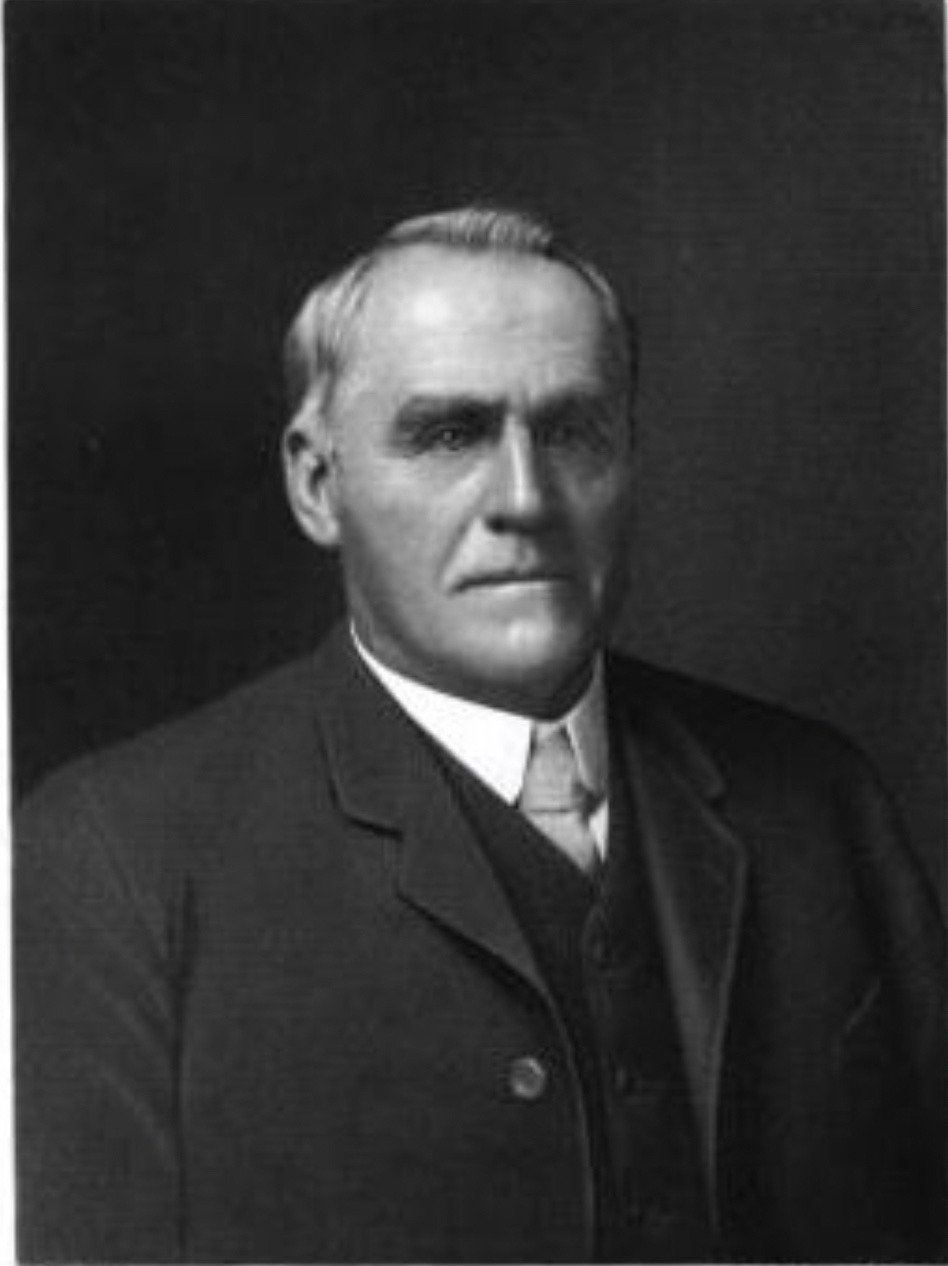
Early East Idaho cattleman Jot Travis' herd went to William Burke in the mid 1880's, and about a decade later Burke expanded his stock holdings considerably when he purchased five thousand head from southern Idaho stockman O.P. Johnson, who had ruled the roost there for a decade and been in business for twice that long.
A Western pioneer and Idaho freighter, stockman Orville Payne Johnson was born in 1832, somewhere in Tennessee. Orphaned young, he knew only his parents first names, William and Sarah. Still, he garnered the wherewithal to become a gold rush Forty-Niner, as a teenager taking the isthmus route (there would be no Panama Canal for several decades) to the California gold fields. “O. P.” made a small fortune mining, but as a young man with ample appetite frittered it away in San Francisco's dives and gambling dens.
His dissolution almost made him quit his western trip and return home. But he stuck it out, did well enough to again celebrate in San Francisco but with a bit more temperance this time around. He was in that city in 1854 when “General” William Walker, a fellow Tennessean, was recruiting men for the conquest of Nicaragua but wisely stayed out of that fray, instead spent the next decade all over Northern California, the Pacific Northwest, and the northern Rockies. His first entry into Idaho came in 1862, at Lewiston and Elk City.
During the summer of 1864, O.P. bought mules in Oregon, where he was known as "Poker" Johnson, and Washington and started a substantial freight operation running out of The Dalles. He continued that business for over a year, primarily taking freight into Boise City and the Boise Basin gold camps. He sold the freight outfit, bought a cattle herd, and established a ranch on the Snake River ten miles below the mouth of the Boise River.
The ranch prospered, but Johnson sold the entire operation in 1873 to find a more healthful climate for his ailing wife. He had married in 1864 and in 1868, while he and his wife Rosanna, destitute and childless, were operating a wayside inn in Horseshoe Bend, they "adopted" a baby girl who would, after Johnson died in 1916, cause his third wife great consternation by emerging in the courts as a contestant of the estate.
The Johnsons moved to Boise upon the sale of their homestead and for a short time O.P. ran a meat market in the city while he acquired enough range land for a big ranch. Within a short time, he began trailing herds of surplus cattle into Wyoming for shipment east, driving 2000 head in 1877 to the Black Hills with Eb Pinkham and fifteen other men. His drive to Rawlins in the summer of 1880 was double that size. Johnson was feeding his own 2150 cattle in 1879 between Canyon and Indian Creek (between Mountain Home and Boise) in September, where he found feed and water scarce.Reports of the area claimed a hundred thousand cattle and fifty thousand sheep had been driven through, the ground stripped of feed. He expected to winter the herd in Wood River.
He was a colorful man, it seems, being sued for slander in 1879 and again years later, and carried a gun for much of his life. In 1880 he drew on a former employee at a saloon and, though being the quickest of the two, luckily averted murder charges when a companion shoved his pistol aside. A posse was soon hunting his assailant, Frank Cottner, who it was believed had killed two other men. They would still be looking for him three years later.
O.P. liked to relate a tale of his involvement in vigilante justice, when he purposely tied a loose knot in a noose that was used to hang a man. The man fell to the ground and was declared free to go, having evaded death, while O.P. sweated that he might be found out for his act of lenient justice.
In 1883-1884, the Oregon Short Line completed a railroad across Idaho, ending the need for cattle drives, so in 1884,Johnson moved his operation to the Hagerman Valley. In addition to feeding on his range there, he ran about 2,000 head of cattle on the Camas Prairie, north and east of Fairfield. He continued there for well over a decade, developing a reputation as one of the premier cattlemen in the region. During that time he did his only stint as a public servant, a four-year term on the commission for the State Insane Asylum in Blackfoot. It was a job O. P. found “distasteful,” but felt duty-bound to serve.
Like most cattlemen Johnson suffered losses to rustlers. The Criswell Brothers were being held on $500 bonds in 1886, charged with stealing his cattle—which were worth $30 a head at the time, a high market year. And like most cattlemen, Johnson drew suspicions from those less well-to-do as well as his peers. Two hundred cattle near his range at Billingsley Creek (near Shoshone Falls) were found poisoned, and the fact that he suffered almost no losses indicated to his neighbors that he was the culprit behind the act. He explained that he instructed herders to keep his cattle from the area, which was rife with poisonous larkspur and "wild parsnips". The trail near the creek was so boggy that fifty cattle went down on it and died before they could extricate themselves, and downstream neighbors were angry about that, too—they demanded that Johnson remove the carcasses, which were on his property.
His gunsmanship came to play again in 1890 when he and two companions confronted two other men. Johnson demanded they quit making a ditch through a neighbor's land, the discussion escalated, and the parties exchanged seven to ten shots with at ten feet without any bullet finding a mark.
Rustling hit Johnson hard in 1894, four men being found guilty of stealing and butchering his cattle. The group included a well-respected butcher in Shoshone who was the ex-county commissioner of Logan County (a briefly-lived county carved from Alturas and Bingham at that time). Within weeks, seven more rustlers, all of them from the Sims family, were charged with rustling Johnson's cattle.
Johnson estimated that in the prior five or six years rustlers had cost him $40,000 in losses (over a million and a half dollars today, adjusted for inflation) and noted he was lucky to find some of the culprits in the act. When two of the men turned state's evidence, the remainder of the rustling ring, including the Sims family, became implicated. Johnson's herd size had reached 6000 head at the time.
He was hard-headed in regards to labor, his 1894 hay crew of twelve going on strike for a pay raise of a quarter a day (from the current $1.25) and his response the hiring of replacements. Ten years later, after he'd converted his operation from cattle to sheep, he faced down a sheep shearers' union, refusing to pay the going rate which had been set. The hand and machine shearers union had posted notices around Bliss and Shoshone, warning shearers to avoid the area due to the sheepmen's low pay.
The switch to sheep came after Johnson, in the spring of 1897, sold out to William Burke, the southeast Idaho cattleman who was partnered with Simon Lonergan. Johnson acquired around 10,000 head in a single October transaction that year. He considered sheep a mere sideline but felt they offered a “quicker profit” than cattle. Ironically, the aging stockman ran afoul of the old “Two Mile Limit” law that protected cattlemen by restraining grazing by sheep anywhere near places cattle had historically pastured. His sheepherders had let the flock get too close to a cattle ranch and O. P. ended up paying a fine.
Within a year of entering the sheep trade Johnson was butting heads with neighbors and government, facing charges of illegally taking four thousand sheep across the Malad River. A year later he was accused of offending the two mile grazing limit. He was called to the courthouse again to face slander charges, was found guilty and forced to pay one dollar for his action. His 1902 wool crop brought him 10k (half a million, today), so the business was as yet a lucrative one.
Johnson retired in 1906, selling off the Hagerman operation and moving back to Boise. After that, he and his wife spent winters in San Diego, California, where he died in February of 1916. Shortly after his death, a woman named Kate Bedal, the daughter he had adopted, entered court proceeding against Johnson's wife, contesting the estate. In the legal battle, a history hidden to most entered the public domain when Bedal made the case that she, not Johnson's wife Nellie, was the rightful heir of the estate.
The trial revealed that in the fall of 1868 Johnson entered into an agreement with William Alexander, a miner, to adopt Alexander's daughter, whose mother had died in May when she was four months old. The Johnsons had been taking care of her for months while Alexander worked his claim, and when he came back from the mines unable to pay for the Johnsons' child care he reluctantly entered the adoptive agreement with the stipulation that the couple would leave any inheritance solely to the child. Nellie Johnson, Orville's third wife (married in 1906), knew nothing of this arrangement.
The Johnsons moved to the Whitley Bottoms along with the girl Kate, a halfbreed Indian child, and thirty-five cows. He had upped the herd to 300 head by 1873 but sold those and his 304 acres on the Boise River. A year later Alexander, absent for years, called upon the Johnsons and threatened to take the child, and Johnson was powerful enough by then to procure a special legislative enactment to change the daughter's name to Johnson, taking Alexander out of the picture.
Kate would prove somewhat troublesome, marrying at 14, divorcing her husband not long after, then immediately marrying another man, Richard Tucker, two days later. The couple then lived with the Johnsons and had three children before she divorced him in 1891. Three years later she married Harry Sprowls, who died in 1900. Rosanna, O.P.'s first wife, died about the same time as the Sprowls dod, and Kate left, according to testimony at the estate trial, because of O.P.'s immoral conduct as Rosanna was dying. Nellie Johnson's countered with a different story at the trial: Johnson had accused Kate of getting their Chinese cook to poison him, forcing her to leave.
Kate saw Johnson rarely after that, though her daughter would care for his son who was in poor health. Bearing considerable ill will, O.P. wrote two wills—one in 1906 and another in 1912—during their falling-out, each of them bequeathing her fifty dollars and "no more." He married Nellie in 1906, when she was 43 and he was 76. He lived just ten more years.
Kate won her case in district court but Nellie appealed. Most of the property, worth $300,000, was sold before his death, and the appeals court consequently ruled that the district court should divide only what was left, Bedal to receive only a typical child's share. The agreement between Alexander and Johnson, the court said, "offended the common instincts of natural loyalty," hence Nellie Johnson would get all the property put in her name before O.P.'s death and split the remainder with Kate Bedal.
But that wasn't the end of the legal proceedings. Four years later, in 1923, Bedal's suit against Nellie hit the Idaho Supreme Court. Nellie Johnson had left for California after the initial suit with $80,000 in property that she was supposed to turn over to the estate's receiver to administer. She was issued a contempt order then—which she ignored. She soon went to Indianapolis to live, returned from there to Boise only in 1923 to settle up the estate. Once arriving, she was apprehended and jailed for the contempt charge, and after refusing to pay a substantial bond spent six weeks in jail for default of bond and contempt.
The $22,500 Bedal was awarded in 1919 was upped to $73,000 in 1923 and at last the case was ended. Bedal died in 1934 and was buried at Hagerman.