SCANDAL IN ST. ANTHONY
IDAHO STATE INDUSTRIAL SCHOOL ERUPTS IN A SPATE OF REVEALED BEATINGS
5/1/202619 min read
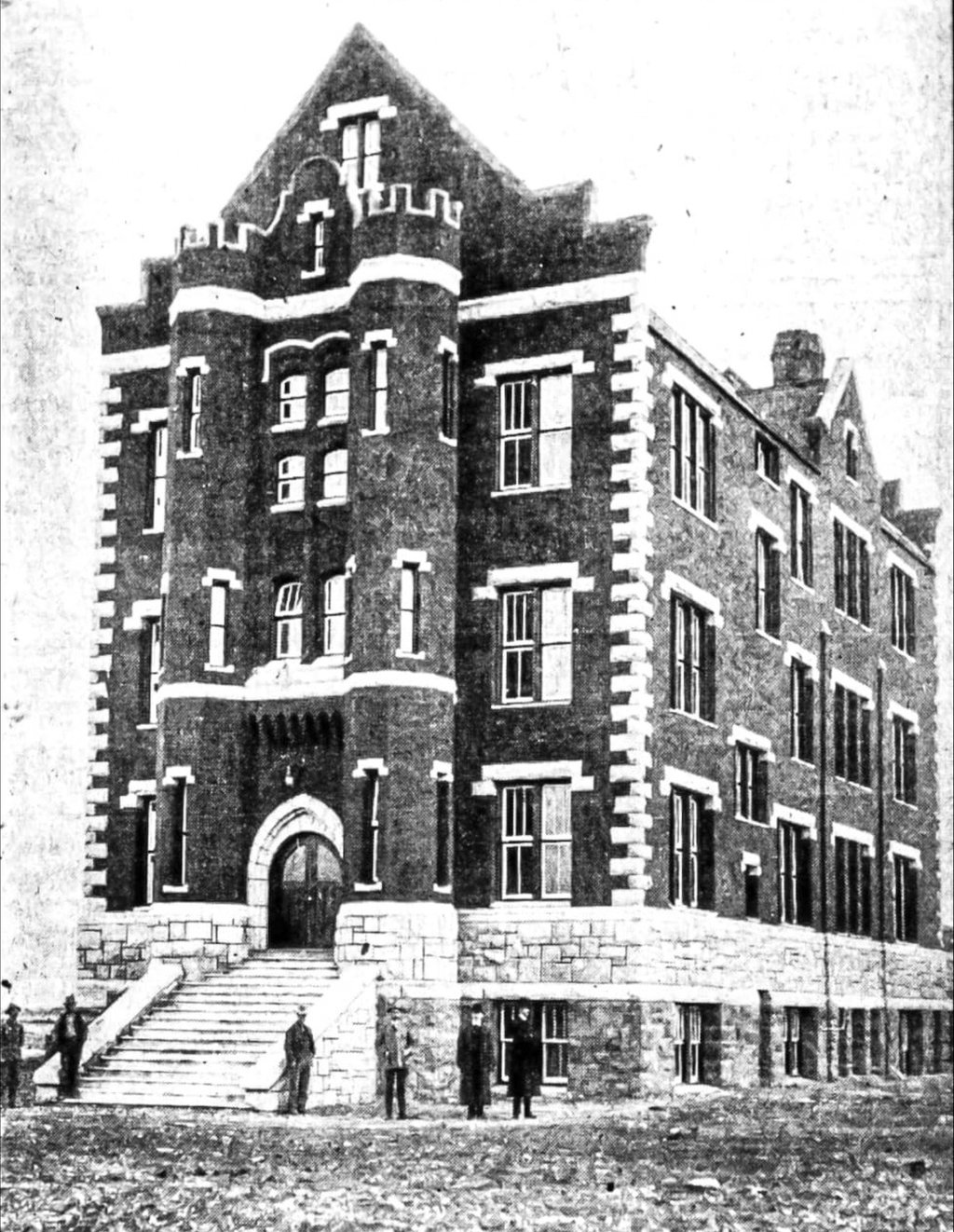
The Idaho Industrial School in St. Anthony (no longer standing)
Teenage students in Southeast Idaho through the 1960s and 1970s often heard the threat that they'd be sent to St. Anthony—where a juvenile detention center or 'reform school' held incorrigible youths—if they didn't behave. Descriptions of the place never took much detailed shape, just held a kind of ominousness one wished to avoid. That characterization may have had its roots in the community psyche, for less than ten years after its 1905 inception it came under intense scrutiny for the staff practice of severely beating the teenage—and younger—inmates, leaving marks that lasted for months and, according to one witness, ended in the death of one girl who would be buried on the Institute grounds.
Two bills to fund an Idaho State Industrial School—a common euphemism for youth detention facilities in the U.S. at the time—hit the legislature in the spring of 1903, the proposal for a Mountain Home location losing to Fremont County's bid in St. Anthony. Site selection was underway by June and in January of 1905 the Institute was operating. Two years into its life under J.T. Humphries' superintendency, the school covered two hundred cultivated acres that included ten acres of truck garden, eight acres of potatoes, fruit trees, pastures and grains. Two main buildings, each three stories high and of stone and brick, stood, one for administration and the girls' dormitory and one for male inmates. There were 69 boys and 25 girls there at the time of the report, who could be incarcerated at ages eight to seventeen and held until they were twenty-one. The boys did almost all the farm work, girls performed the typical 'women's work' of the time: laundry, cooking and sewing. There was a tailor shop, a machine shop, and a barn for cows and horses, where youths were trained to have habits of industry and learned occupations. School attendance lasted for four hours a day year-round and various churches held services on the grounds on Sunday.
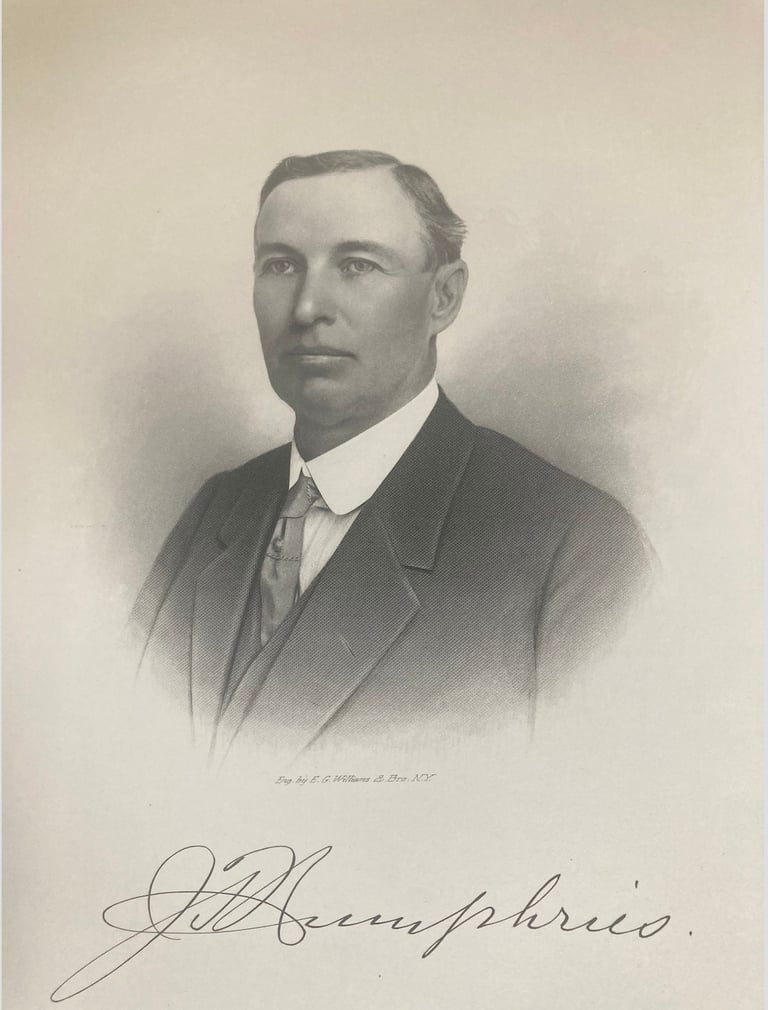
J.T. Humphries
Two years later, Institute population rose to 160 youths. Governor James Brady proposed enlarging the facilities to take care of the burgeoning inmate numbers. Incorrigibility, shoplifting, drunkenness were among the offenses that might send a youth to the facility—George Washington Stowell, who kept stores in Thomas and Riverside in that era, at the suggestion of law enforcement sent his two wild sons there (they had run away from home and taken the family's horses), one of them for the third time, to learn their lessons of obedience.
In 1910, the population rose further still, to 265 boys and 109 girls, and its staff was 'heartily commended' for its work. The Idaho Statesman reported that it was not a "miniature penitentiary" and didn't employ "harsh methods" but instead "kindness (with a capital K) was the watchword." The children's table manners were better than many of those in "well-regulated homes." The Superintendent described the Institute's aim as "teaching students the rules of this game" of life and "insure their success." The legislature had apportioned $55,000 for the school's operation (roughly two million in today's funds), giving them a well, steam heating, and electrical power. The boys did almost all the work of constructing these in addition to two thousand feet of sidewalk four feet wide. They had also dug a sewer ten feet deep and 1800 feet long, installed three miles of fence, and now grew 30 acres of truck garden on 360 acres. 17000 gallons of milk and 6800 pounds of butter had been produced in the last year, with 12 cows, 18 veal-aged cattle, and a hundred hogs being butchered in the past year for school use. The youths performed in an eighteen-piece band with girls playing only stringed instruments.
By 1911, Governor Hawley expressed dissatisfaction with the cost of 'incarcerating' youth for years when many should be placed with other entities like the Home Finding Society, which operated to place parentless children in foster care. The felt that unfortunate children of "good behavior" shouldn't have to live side by side with "depraved and criminal" children as they did at St. Anthony. He wished the two kinds to be separated in the future.
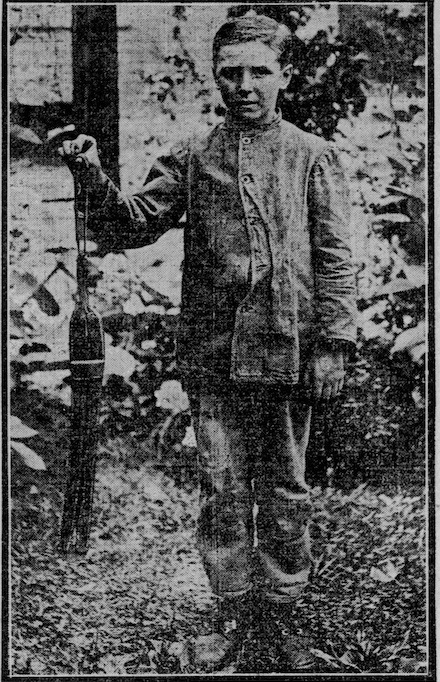
Ellis Greer with the tug used to beat him
Just a year later, scandal hit the school when 10-year old Ellis Greer of Lewiston ran away from the Institute in late July, having been severely beaten. Fifteen reputable Idaho Falls citizens sent Governor Hawley a telegram stating Greer had arrived there black and blue with bruises and with lumps caused by being whipped by a five-foot tug, each lash knocking the boy off his feet. Superintendent Humphries was immediately but temporarily suspended. Hawley was so disturbed by the news that "he could hardly get himself into condition to receive the distinguished guests" that were arriving that night in Boise.
Public sentiment ran hot, calling for the removal of any employee or official who even knew of the presence of the tug or thong. Early investigations showed that the offending weapon was frayed on the end, indicating frequent use. Attorney General McDougall said that if such a beating was administered at the prison, public outrage would force prosecution. He went on the record as not opposing corporal punishment in the right doses and related Greer's story, saying he was small, bright and precocious for his age.
Greer's thirteen year old sister and Uncle, Thomas Skeen, were instrumental in his incarceration, as she, according to Ellis, had taken the five dollar gold piece, which he was accused of stealing, and bought goods at Lewiston with the money. He said he had not missed a day of school in the prior year and had never been punished by his teachers. His father and mother had separated when he was three,
For his first five weeks at the school Greer had not been beaten, though his warden Mr. Schaft was often "cross and snappy." He was placed in Company B with fifteen and sixteen year old boys where each was assigned a number of rows in the field to hoe. He was not able to keep up with the older boys on the second day so he worked through his lunch hour, but when he fell behind on the third day he was whipped for his failure. A few days later, when he wasn't peeling potatoes fast enough, he was whipped again. On another occasion he failed to pick radishes efficiently so was beaten. His last beating occurred when he wasn't hoeing potatoes fast enough, Mr. A.S. Stanley telling him he'd be whipped the next morning. Ellis was taken to the root house, stripped, a handkerchief was tied around his mouth and he was whipped so severely that he passed out twice. Stanley threw water on his face and called him a "crazy Englishman," then made him dress and go to work. McDougall, upon hearing Greer's story, recommended an investigation be made.
Inmate food became an issue, inadvertently so—Greer told of the fare but without complaint. The boys received meat only once a week, on Sunday. He was thought to be exaggerating but two other boys who had left the facility corroborated his story, suggesting potatoes and gravy to be a three times a day meal with a cup of coffee in the morning to wash it down and water at the other two meals to serve that purpose. One of the other boys, an eight year old from Soda Springs, reported similar fare, though he said oatmeal or corn flakes were occasionally served and once in a while pie for dessert. Sunday corn and tomatoes might be served with boiled meat, too, and on random days a cinnamon roll or a donut could show up. He reported having been whipped six times,
The other boy interviewed, a twelve year old Idaho Falls orphan, gave essentially the same report in regards to the food and reported that he was whipped with the strap five times in six weeks. Sometimes he was whipped on his hands and sometimes he was stripped from the waist down and made to lie over a stack of potatoes. He told of the school's daily routine, rising at five o'clock, making his bed, going to breakfast and then to work, with lunch at 11:30. The boys then worked until 5:30. "We only had butter twice" while he was there, he said. Table monitors dished one bowl of potatoes to nine boys and they did not get seconds. "The big strap hung in the potato shed," he reported, and every guard had one. Some straps were bigger, some had handles. He allowed that Mr. Wellner had a short harness tug but didn't use it much, while A.S. Stanley used the big strap. But, he said, all the guards whipped the boys.
He told of a boy named "Dummy Rice" who got whipped two and three times a week and once broke a hoe, which the guard then used to beat him with. When asked why they didn't report the beatings, all the boys said they didn't complain for fear of getting beaten worse. Superintendent Humphries' supporters were shocked by the revelations, as he had been portrayed throughout the media and community as a model for such institutions.
Just as happens today, the factions for and against Humphries fought for control of the events' narrative, with the Governor receiving petitions purportedly signed by 200 inmates—signatures written in lead pencil—asking Humphries to be retained. The war for public opinion was underway.
Ellis Greer was escorted to Boise and housed at the Children's Home, where he displayed his injuries to investigators. Five days after being beaten, his back was still "covered with huge green and yellow spots and stripes." His hips bore "black and blue blotches." His thighs and calves had bruises and the "remains of cuts inflicted...by some dull instrument." Inside his left leg was a large bruise, still black, two inches by four. The attending Idaho Falls doctor said Greer's worst wound was "across the abdomen, above the groin." That blow could have caused death, he said. His ribs and arms also bore wounds.
Greer's last beating occurred on July 26. Realizing too late he had missed the call to gather, he was afraid to return late, fearing another beating, so decided to return home to Lewiston on the train. The conductor thought he was a runaway, Mrs. Nancy Pugmire, a trustee of the school, was on board and she took him to Idaho Fall police who put him in jail. The next morning Sheriff Bucklin questioned Greer but he wouldn't answer at first, but finally he displayed his wounds. The Sheriff contacted the doctor, the mayor, and others and their angry telegram to the Governor ensued.
The Sheriff, alerted to the offending strap, went to St. Anthony and enlisted Fremont Sheriff to find it as evidence, but it was not in the place that the boys said it always hung. It had been removed, the Institute having been warned by telephone of the Sheriff's coming. After quibbling with Institute authorities and threatening a guard with his fist, Bucklin induced Mrs. Humphries to produce the strap.
(Insert picture of Greer and tug) The instrument was two tugs made from a buggy harness, sewn together on another strip of leather with a leather handle added. A thong was on the handle, to be secured around the user's wrist. It was 20" x 2", its handle adding six inches and the thong another eight. It had originally been four inches longer, Greer stated, but it broke off while beating Dummy Rice.
A.S. Stanley, Greer's assailant, was jailed with a $2000 bond. Sheriff Bucklin stated that there was enough evidence. from Greer and several other boys. to prove that Humphries was present at some of the beatings, if not Greer's. Humphries, in a response designed to ward off his guilt, sent a telegram to the Governor stating that as soon as he discovered Stanley's acts he requested he be prosecuted.
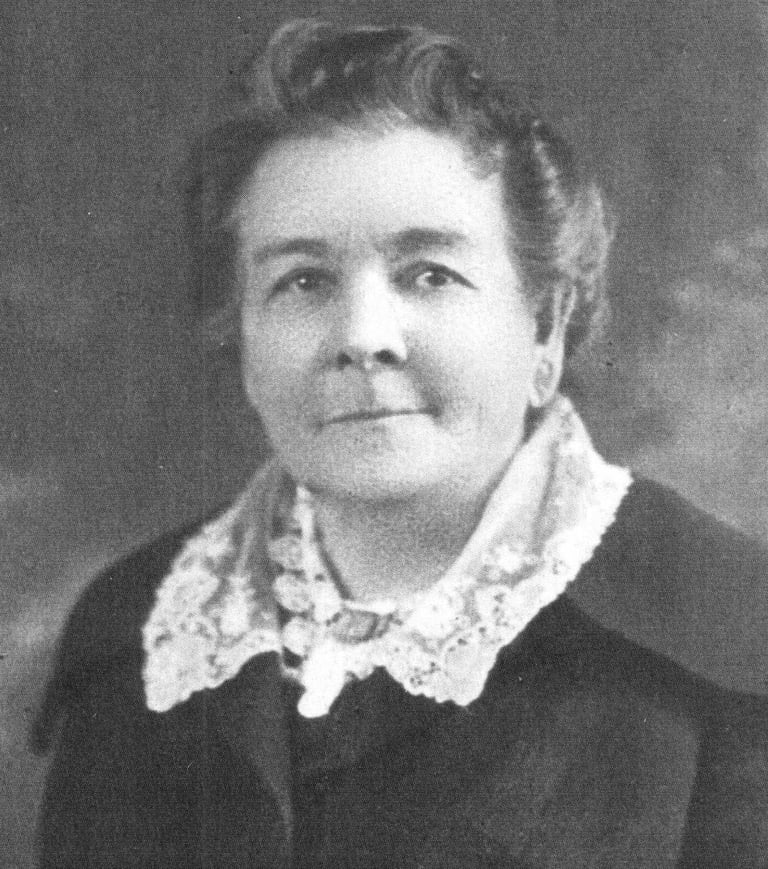
Nancy Rich Pugmire
Mrs. Pugmire, a resident of St. Anthony and an Institute board member was, in the absence of its head, O.O. Haga, authorized by the governor to convene the board and 'take prompt and official action.' The board suspended Humphries. Pugmire and Haga would be instrumental in the coming months, becoming two crucial keys to the Superintendent's career. Pugmire's family had deep roots in Southeast Idaho—she was, with over fifty others, the offspring of LDS polygamous patriarch Charles Coulson Rich, whose family would include a judge, a sheriff, and attorneys that influenced Idaho history on both sides of the nineteenth century's turn into the twentieth. She served as MIA President for twenty-nine years in the Bear Lake area., O.O. Haga was a prominent Boisean, a professor who would become an important Republican politician as head of the party and one of the most influential early attorneys of the Idaho Bar. Haga may have felt he needed to save face, as in January he had glowingly reported the school in splendid condition. He had been treated to a lengthy period of entertainment from the "Boys of Company B" who performed several musical numbers and poems.
More boys came forth with testimony in the days that followed. Hawley, McDougall and Grace Shepard—another trustee with Republican ties, having been voted in as Superintendent of Schools in 1910 after seventeen years of teaching—went to St. Anthony for an open hearing regarding the events that had come to light.
Four whipping straps were introduced as evidence and fifteen witnesses testified, all saying they were beaten by thongs made by the school's shoemaking department. Two girls testified they had been taken to Humphries' room, their clothes pinned up, and then beaten on the bare legs and body by him. A department head declared his innocence, testifiying that he had heard of no rule against whipping until the last few days. St. Anthony residents considered the event as a frame-up and supported Humphries, perhaps fearful of the loss of an economic wellspring for the community.
In the coming days, Attorney General McDougall would walk back the well-publicized accusations. He noted that those testifying were for the most part inmates or former inmates of ages 15-20, casting doubt on their claims, and most said they were only whipped after committing numerous infractions. Every boy had 'freely and frankly testified that...they had the punishment coming to them" and that they had mostly been treated kindly. He added that Board rules authorized corporal punishment in extreme cases. And, he said, no boy testified against the quality of the food, which seemed to have become in some sense a bigger issue than the beatings themselves. Many St. Anthony citizens claimed to be regular passersby of the Institute and having seen no misdoings, the boys out in the fields and able to freely chat.
Contrary testimony came the next day when Charles Portridge, a former inmate but now married with a child and living in Shelley, related having been beaten multiple times and trying to escape three times—succeeding on the last at age sixteen. His bruises were visible five months after one of the bouts, he said. He also spoke of three girls at the school who escaped while he was there, but were then caught. One named Wilson was beaten so severely she was put in the hospital, where she died. Portridge helped dig her grave, he said, adding that the inmates were told she died of typhoid.
A farmer named Allen who was near the school then testified, telling of how he had harbored three of the school's runaway boys, their ages of 9, 14, and 15. Their backs were black and blue and covered with scars. One of the boys' wounds were so fresh that he could only remove his shirt with difficulty, his shirt sticking to his back.
The instruments of those whippings were then produced at the hearing. One of the other boys, Hallard Hamilton, a 17-year old victim, identified the one used on him by the bandmaster when he was punished for removing a loose leaf from a music book. Hamilton was forced to bend over and touch his toes while Fitzgerald beat him on his kidneys and at the small of his back. Unable to take it, he stood up and Fitzgerald hit him in the head, then summoned two boys to hold him so he could resume the beating. He told of subsequent problems with his kidneys, and the Dr. testified that he was in a serious condition. Other members of the band testified that Fitzgerald had been nice to them, only beat them when they deserved it.
More witnesses came forth, testifying that Humphries had struck sixteen year old Louise Moultre in the face with his fist several times. They had seen him whip several girls lain over a table with their limbs exposed. Days later in the hearing, fourteen girls testified that they had been beaten with heavy straps. One, Eva Horrigan, was beaten while laying on a table, her body bare from the waist down. Gladys Chapman said her hips were black and blue from a beating by the matron, who hung her over the edge of a bathtub. The nurse, Mrs. Leary, punished another girl with cayenne pepper. The hearing ended on August 24 with Humphries taking the witness stand for fourteen hours. He denied beating the girls, denied giving anyone the authority to beat the children.
Harry Holden and W.P. Hansen, attorneys instrumental in the charges against Industrial School officials, perhaps having felt that the hearing hadn't been sufficiently and thoroughly publicized (it had been closed to the public as the details of the accusations became more graphic) addressed an audience at Blackfoot's Isis Theatre at the end of August. Holden reported that, in the first days of the hearing, St. Anthony residents voiced their support for Humphries by clapping their hands, snickering and giggling, at numerous times conducting themselves in such an "ungentlemanly and unladylike manner" that the Governor had to rebuke them. Grace Shepard, on the second day of the trial, voiced her opposition to the investigation as "demoralizing to the school and criminal." She had noted her mind was already made up and spent much of her time assisting Humphries' lawyers. Later, when it came for a board decision, her reasoning would flip: she needed more time to mull the testimony, thus delaying a decision until after the election (in which she was reelected).
Holden synopsized the testimony in great detail:
Norman Hansen, 20, beaten by his family manager George Keefer, struck 70 times with a strap a quarter inch wide and 18" long.
Andrew Keefer, now 23, beaten.
Lehi Galloway, stripped and beaten with a sole strap three feet long. On two of the occasions he was forced to bend over and touch his toes while, naked, being beaten. He was also bent over a pile of potato sacks and beaten by Mr. Schaff, 135 strokes administered. He was also beaten by Mr. Minges. Nephi Galloway, from Shelley, spent 2 and a half years at the institution, was beaten several times, stripped twice, beaten by Minges with a strap three and a half feet long by three inches wide, Once laid over a pile of potato sacks, beaten 143 strokes. could hardly walk or sit afterward.
Carl Ernest, 18, was beaten by his family manager, named Sheldon, for not marching properly, was administered twenty blows across his naked body. Estes also whipped him, stripping him naked first, in the horse barn, administering the blows across all his body. Other boys told him he had gotten 200 blows. Estes admitted to this, said Humphries had given him permission to give the whipping.
William Lovejoy, 17, was beaten. He testified that Garfield Stowell was dealt 84 blows that left him black and blue.
Sidney Moore, 17 years old, 17 blows.
Charles Keller, 17, testified he had not been whipped but he knew from observation that Sheldon whipped Moore and Elmer Brownell.
Charles Spencer, fifteen, said he'd been beaten by three managers, Fitzgerald, Schaff and Perry. Fitzgerald, the band master, gave such a whipping that he still has scars. He struck him in the eye, requiring two weeks in the hospital. His school teacher, Miss Johnson, after asking how he got the injury, left her post not long after.
Joe Swan, 13, was whipped by Peckinpaugh for talking, by Schaff, and Perry.
Herbert Long, 13, was beaten by four superiors—twenty times by Schaff.
Roy Durfee, 14, had his pants taken down and was then beaten by Sheldon. He had eaten an apple from the farm, after not seeing one for two years, and whipped for it by Schaff until he was black and blue. He testified that he thought he was not whipped enough.
Walter Smith, 13, was whipped while naked. said he liked the treatment and is well pleased with it.
John Jackson, 10, was beaten five times. Said he needed them all.
Harvey Rickett, 12, was whipped by Estes and Schaff.
Louis Averill,, 14, was whipped by Fitzgerald.
Terry Byers, was whipped by three superiors, including Fitzgerald—for dropping his musical instrument.
Nephi Jones, 18, was whipped three times by Packenpaugh, once for talking, once for carrying a note, and once for talking in the dining room—23, 39, and 75 blows, respectively.
Sewell Dean, 17, was stripped and given 112 blows by Sheldon. 1A second time Sheldon administered 100 strikes. Estes also whipped him 100 strokes.
Ralph Brickey, 18, was stripped and beaten. He testified he deserved it.
Gordie Woodwort,h, 16, was beaten for saying the water was cold—by Sheldon.
Write your text here...
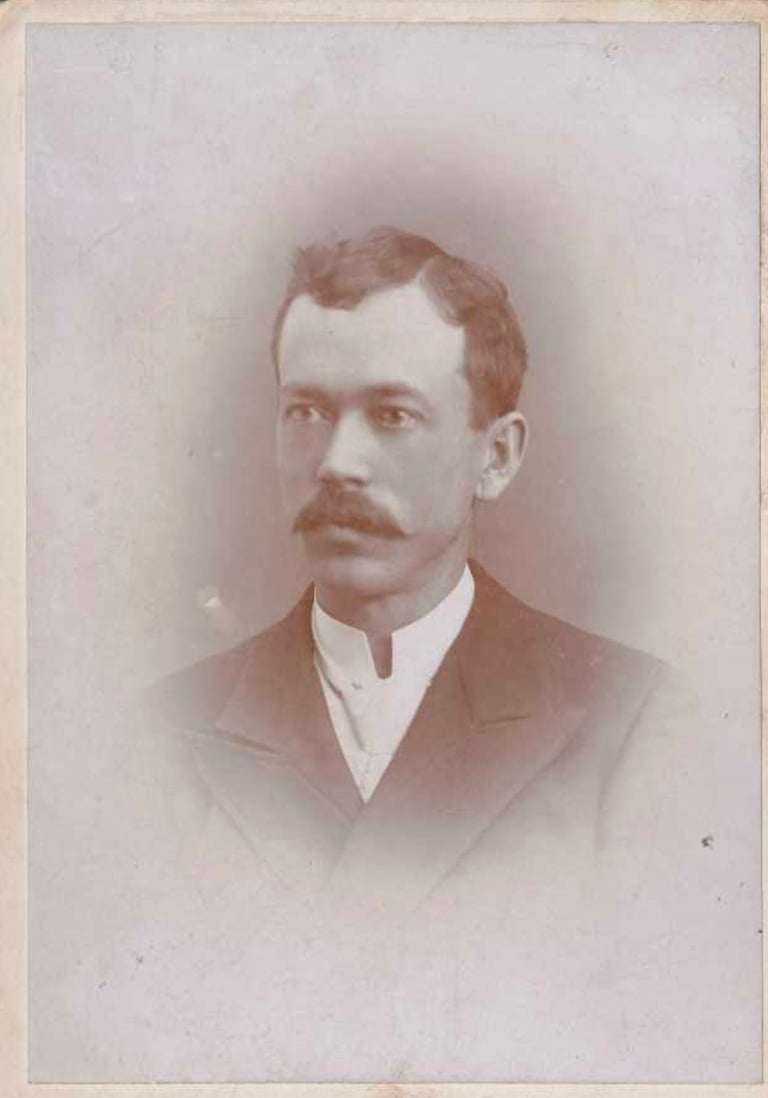
George Hill
A month later, George Hill, who Governor Hawley had appointed to head the investigation of the school, said the results would take time, the two thousand pages of trial testimony less than half transcribed. It would be into October, he said, before the stenographer completed the trial tome and some weeks before the material could be digested by authorities. Humphries was reinstated as superintendent of the school and employees were instructed not to administer beatings.
Holden excoriated the governor for reinstating Humphries, thus putting those giving testimony in fear of reprisal for their statements. He called it shameful that he allowed Grace Shepard to delay her decision until after the election. Hawley responded that May Scott Worthman a candidate for Republican elector, not him, had taken the lead in asking for the delay, needing more time to process the two thousand page report. He also noted that Shepard had tried to halt the investigation shortly into its life but Hawley had ordered it to continue. He blamed Shepard and Worthman for the delay in the decision.
Hill, a prominent Rigby man, would be an outspoken critic of Humphries throughout the ordeal. With his father he had been an original LDS pioneer who colonized the area in the 1880s. He later became instrumental in the organization of the Rigby Hardware, Lumber & Manufacturing Company, one of the largest department stores in eastern Idaho. A few years after the Institute events, he would become the general manager of the Beet Growers Sugar Company, a sugar manufacturing plant near Rigby that would initiate a lifelong fracture with his faith. The enterprise was an independent and cooperative one, unlike the Mormon owned competitor U and I Sugar, its stockholders numbering nearly three thousand farmers and businessmen. His disaffiliation with the LDS faith came, according to a descendant, when LDS Conference President Hart told his congregation "“Now Brethren, you all know we are short of sugar beets this year. I’m sure that you realize that the Lord would want you to bring your beets to the Lord’s sugar factory and not to that other one.” Hill was offended and never set foot in an LDS Church again.Senator Hill served as chairman of the board of trustees of Rigby under its village form of government, He served as Rigby's first mayor. He also was a respected politician, being elected In 1910 to the state legislature's lower house.
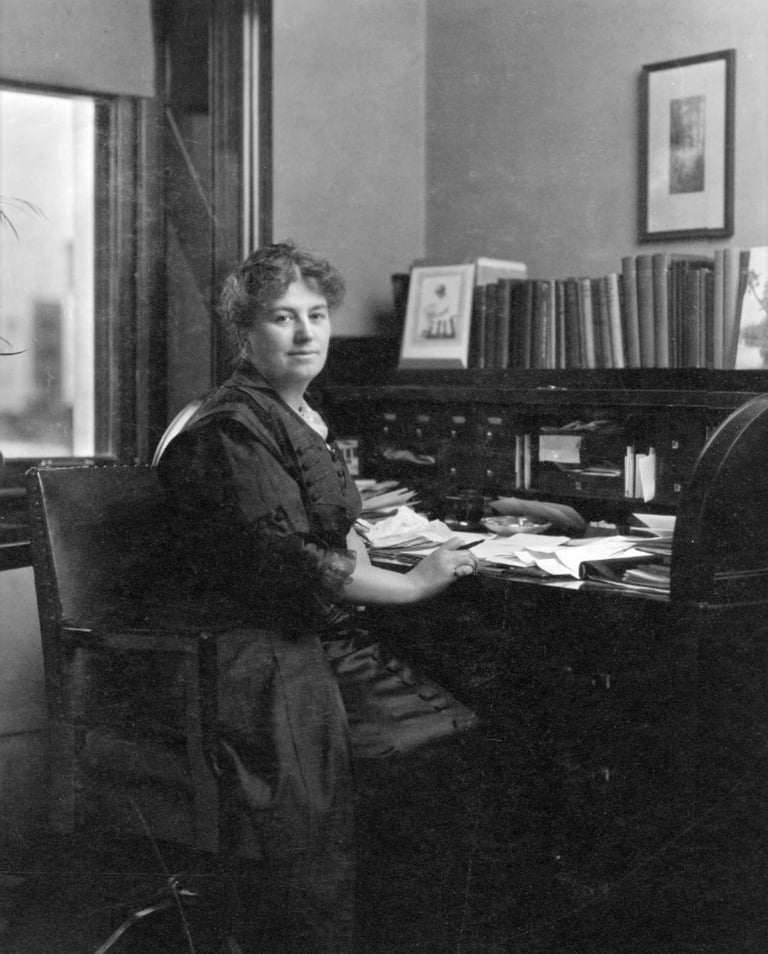
Grace Shepard
Humphries was exonerated in mid-November, after the elections—accusations had been made that the delay had been to protect those running for reelections. Three of the board members, President O.O. Haga, state superintendent of schools Shepard, and St. Anthony resident Mrs. Pugmire, voted to reinstate Humphries, with George Hill and Governor Hawley voting against him. A sixth member, Mrs. Worthman, abstained from voting. The board also voted to change the rules regarding corporal punishment—a witness would now have to be at any beating.
The board also recommended there be more assistants hired, the school being understaffed. Defending the staff actions that the hearing had exposed, O.O. Haga emphasized the absolute need to administer discipline to the disobedient, lest mutiny occur and property damage ensue. He had visited a dozen similar institutions and all and all reiterated they couldn't function without physical punishment as a tool. He quoted sociologist Charles Richmond Henderson, who claimed the sentimentalist was 'the enemy of improvement,' his pity or his urge for revenge a barrier to a functioning society and a road to lawlessness. He emphasized that the witnesses all testified that they had "been brought to their senses" by the beatings. Six hundred inmates had passed through the Institute's halls in the last eight years and only a few complainants had come forth. And, the testimony of the hearing's witnesses was 'so manifestly exaggerated' that no 'fair-minded' citizen could believe them, for almost all the inmates considered the Humphries as their 'best friends.'
Haga, too, vigorously defended the Institute staff, providing letters from all over the U.S. supporting Humphries. He displayed a letter from a former female inmate, now in Iowa, who extolled his virtues, showed supporting statements from fellow institution heads—Judges, bankers, prominent citizens. He called Humphries 'calm, considerate and kind' under pressure, 'by temparement and training' well suited to his position. Haga's recommendations: beatings should only be administered by the superintendent, his assistant, or family managers, in the presence of a witness, with the event to be well-documented.
Governor Hawley
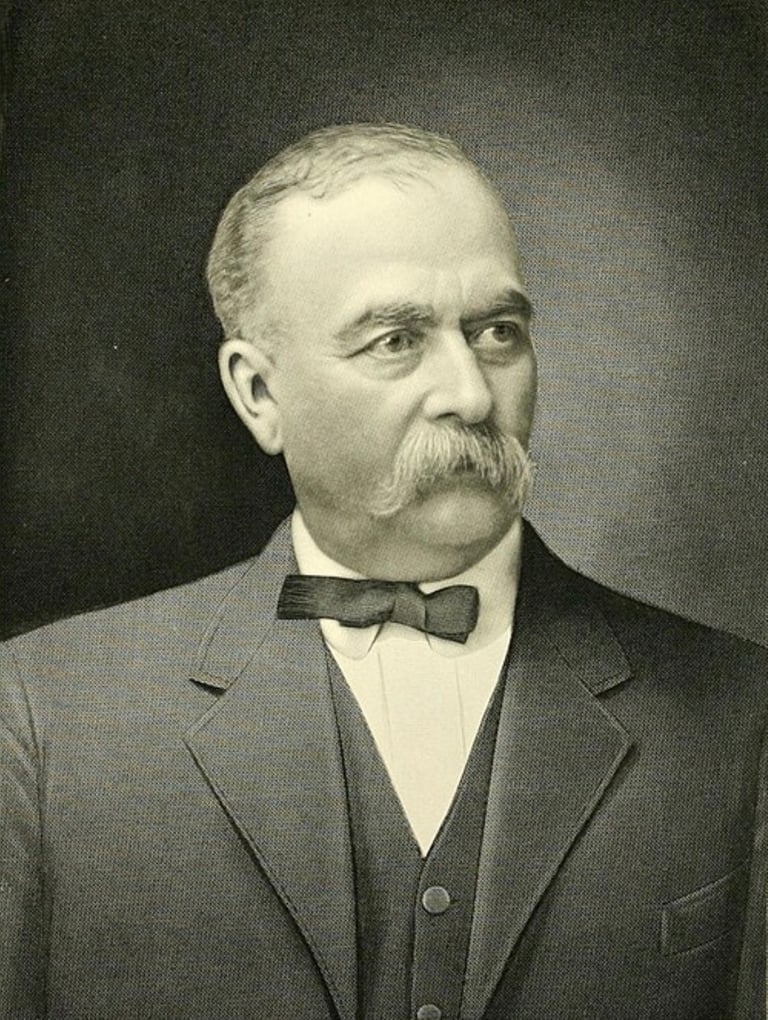
Hawley's take violently differed. He wanted the Superintendent, his assistant, and the bandmaster dismissed. He advocated for a reform school to segregate the criminal element of the inmates from those sent there for utility as a home. He felt the institute was understaffed and underpaid. He wrote that the institution, from its inception, had conducted matters improperly. He recommended the attorney general undertake prosecution of the offending staff members.
Haga "did not take kindly" to Hill's dissenting opinion regarding the board's decision. "A vote of no," he said, "would have been sufficient." Hll'd report just tore down what the board was trying to do and his resignation would be appropriate. He did not pay attention "to the good features of the school" but focussed on extreme cases of behavior. There were rumors that St. Anthony residents were organizing a "get even" response to Hill. As President of Rigby Mercantile he had on occasion gotten bids for Institution equipment, when Institute statutes that no board member should benefit, so prosecution was a possibility.
The ordeal wasn't yet over. In early 1913 the legislature formed a three member committee to look into the Institute affair. O.E. Darnall, head of the National Training School for Boys in Washington, D.C., took a five day look at the facilities and pronounced the institute "modern, up-to-date, well balanced, (and) effectively managed'. It was fortunate to have the superintendent and matron. Darnall's investigation had been requested by O.O. Haga.
Darnall was impressed by the practical work of the inmates, by the school's educational advantages and the moral training instilled. He was convinced the food 'problem' was manufactured, finding the fare well cooked and well served, the inmates having 'table linen and napkins' not usually found at such institutions. He had never seen a more pleasing disposition of children toward their superiors. He recommended an increase in salaries, that a central school building with a gymnasium be provided, and a hospital be built—it was now on the third floor of the administration building and hence dangerous for patients should there be a fire.
Not all were pleased by Darnall's report. A legislative bill was introduced in March to oust Humphries. It went nowhere, a month later the Committee of State Board of Education touring the Institute and retaining Humphries. Their report: "The management has been competent," and "for the best interest of the pupil." It is a school and not a "place of punishment." The inmates are not confined, even at night, The food is "plain but plentiful" and "well prepared."
Humphries, however, would be ousted three years later in March of 1916. The vacancy he left at St. Anthony, the Bingham County News reported, was due to "a criminal familiarity with the girls." The Shoshone News-Press reported further that a St. Anthony girl had runaway and given birth some months later at the Institution. Humphries responded that the conception must have happened during her period of escape, "The birth did not take place, however," the paper reported,"Until ten months after her return."
Still, his supporters stayed true. In April the State Board of Education unanimously voted to reject his resignation. His resignation seemed forced "under fire" but didn't mask his unwillingness to leave, the board said. By December, they'd changed their minds and asked him to leave. He was soon replaced.