The Ireland Gang in Howe
A rough bunch of cowboys invades a private party of "eastern sagebrushers'
5/14/20265 min read
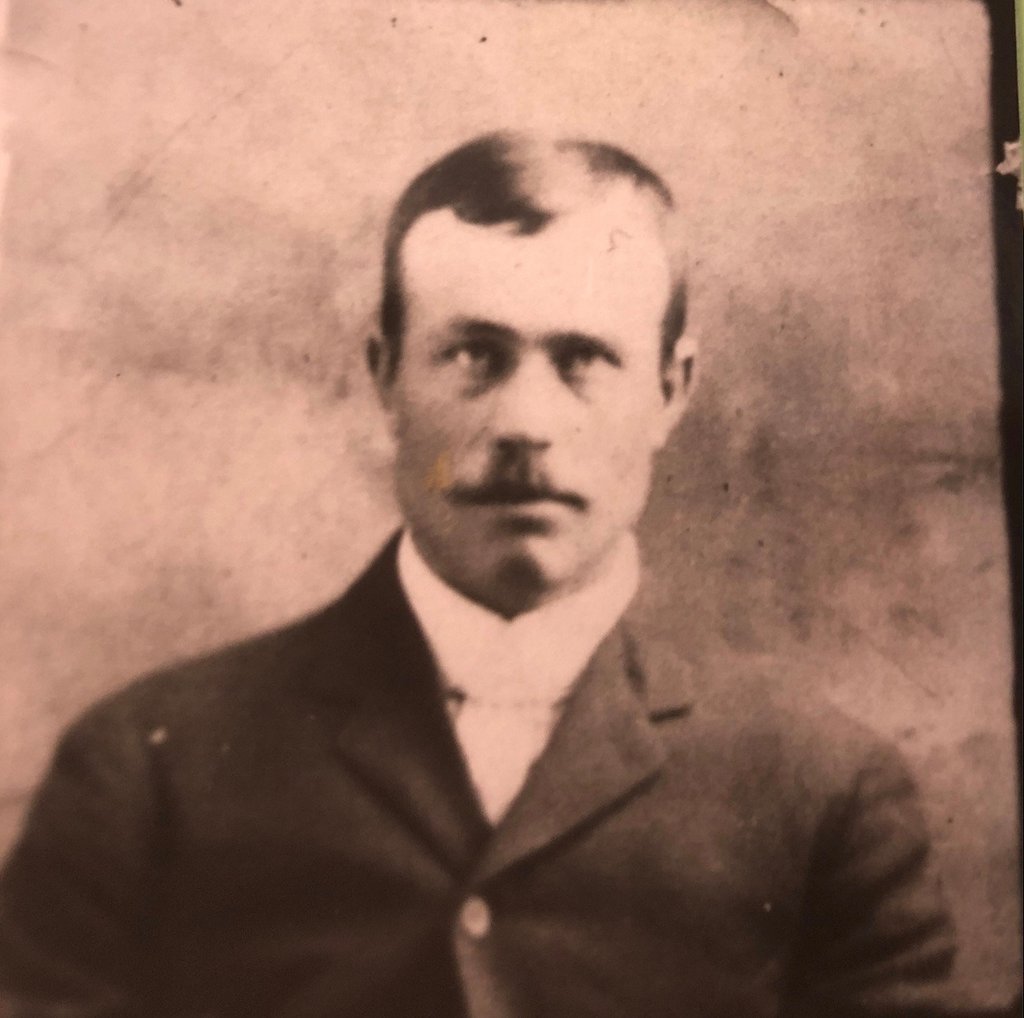
The long simmering feud between old guard livestock men of central Idaho and incoming farmers came to a head on January 2, 1013 at the Catron Schoolhouse near Howe, when 'the Ireland Gang'—comprised of cowboys and sheepmen—invaded a private party of nearby Fremont County settlers who had secured the place for the event, stole the piano and beat many of the 'newcomers', including two older women who were serving as chaperones.
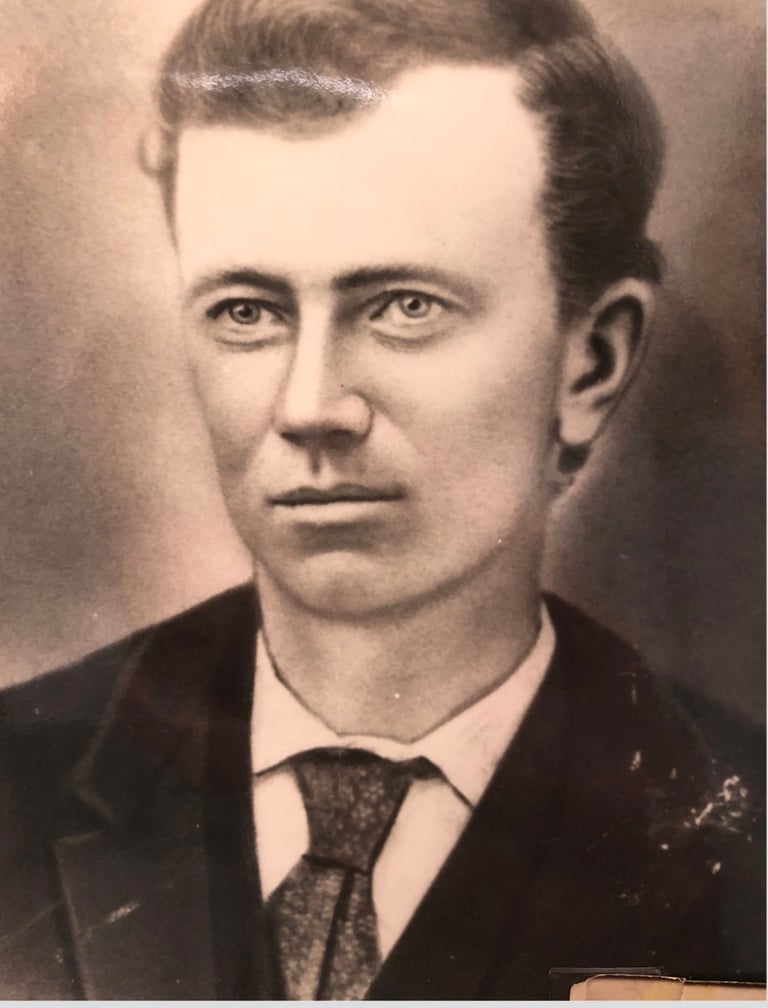
The Ireland family had been mainstays in the area for decades, the patriarch Fletch Ireland, who died in 1890, and his wife Zilla the parents of four boys—Ed, a prominent sheepman and the head of the family after Fletch died; Sam, a cowboy; Johnny, a cowpuncher and small enough to have a side hustle as a jockey. and Bud, who had served time in prison for horse thievery a decade prior. Bud had taken the fall for his young brother John, who went free on the same charge. Fletch, the father, hailed from Tennessee and served in the Civil War for the Union.
"Eastern ways", as homesteaders' manners were referred to, weren't openly opposed by the cattle and sheep interests, according to a Blackfoot newspaper account, until that January evening, when the dance social commandeered by outsiders was held. The 'private' nature of the party was out of the character for the remote area, where evidence of a social gathering had meant, for decades, that everyone and his dog was invited. The Irelands—Ed's house being just a quarter mile from the school—took offense. That Ed had advanced the community $100 to buy the piano used at the school added to the personal injury.
The lights emanating from the schoolhouse reached to Ed's house and he could hear the piano banging away. He didn't appreciate it and as the night wore on decided to gather his forces. His brothers, his brother-in-law John Flouhr, "Skinner" Swan and John Harwood were among the gang that would intrude upon the Fremonters' party .
John Ireland, according to witnesses, entered the school and confronted the party of approximately twenty with a gun in his hand and he began beating on Howard Locke. Several others were also beaten, including the chaperones. The Ireland gang removed the piano, loaded it in their wagon and took it away, dampening the party atmosphere. Ed, Sam, John ireland, Flouhr, Swan, and Hapwood were charged with assault and battery.
Byrd Trego, the editor of Blackfoot's Idaho Republican, had taught at the school twenty-three years before, so had a feel for the nature of the community at that time. He wrote that when he had taught the school had no toilet within a quarter mile, that there was plenty of money for booze retrieved from Arco but none for wood to fuel the school' stove. Trego related sadistic events that included making a 'tenderfoot' walk a mile barefoot in the snow and an 1898 gunfight at the Irelands where a newcomer, in self-defense, outdrew the Irelands at a gathering and shot three men before escaping to Blackfoot where he turned himself in and was later acquitted of any crime.
The Irelands were well acquainted with the law. Eighteen year old John Ireland had plead guilty to assault and battery in 1900, and he and his brother Bud faced horse thievery charges three years later when they were caught in Ketchum with two horses they stole from the doctor in Custer County. The Irelands were described as "old stock rustlers" who took the doctor's two black horses and stole two saddles. The trusty telephone, a newfangled invention, was instrumental in apprehending the two Irelands, the Custer County authorities calling their Wood River counterparts who created a 'sting' operation to catch the pair rehanded at the local livery stable. Their "reputations had never been considered gilt-edged", according to the local paper, and though they weren't the only stock rustlers around their incarceration was hoped to be a deterrent for others. Bud would serve three years for the offense, his testimony removing any blame from his brother, who was five years younger than him.
At the Arco trial, which cost the county thousands of dollars, the defendants all eventually pleaded guilty to assault and divvied up a total of $1200 in fines ($50,000 in today's equivalent). Their attorneys had subpoenaed witnesses from as far as one hundred miles away to no avail. Ed Ireland gifted the piano to the school, forgave the remaining balance they owed on his one hundred dollar advance.
The Irelands would continue to get into trouble. Sam was arrested for stealing whiskey from the courthouse, where it was being stored after being confiscated. He was held on $1000 bond but he and his partner were freed at the Pocatello court, which determined there was insufficient evidence to go to trial. Sam would be spotted in late December wandering the country delirious, "seeing elephants and other imaginary objects." His wife said he had "too quickly abandon(ed) his too familiar cups," causing his convulsions and delirium
Edward Ireland
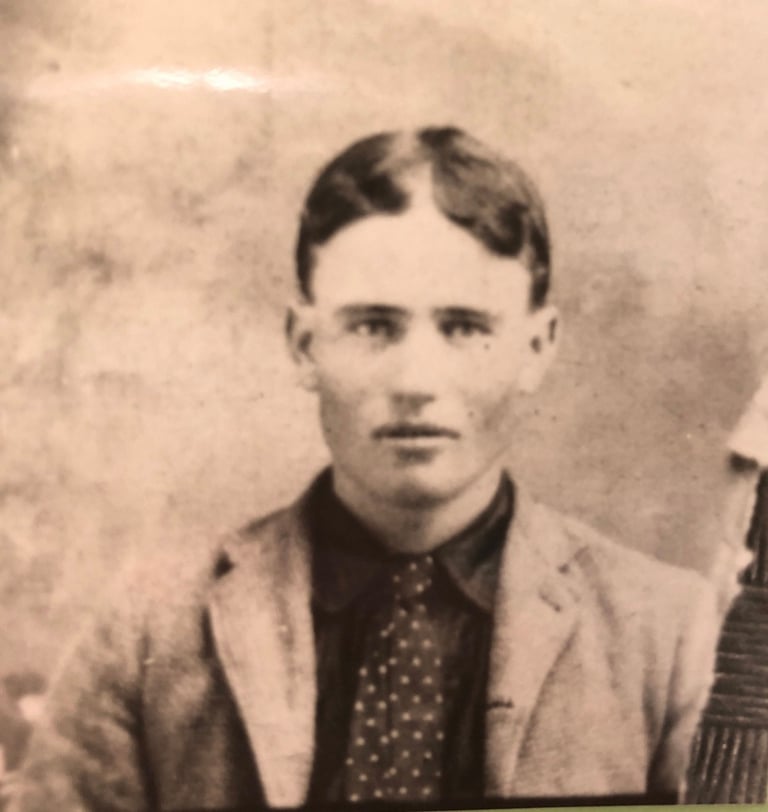
John Ireland
Bud Ireland was charged with being a member of a party that rode their horses over Little Lost settler Gus Colson and nearly killed him. He, too, never faced trial for the offense.
John Ireland got into a nasty scrap with the Idaho Republican editor Byrd Trego in 1915 on Blackfoot's Main Street, upset with his portrayal in the paper. Both men were charged with battery and both were eventually acquitted. He would be killed later in the year by the horse he was riding—his stirrups were lashed and the horse reared over backwards and fell on him.
Sam was arrested for selling bootleg in 1916, adding to the list of Ireland encounters with the law. Their mother, Zilla, was presumably on the other side of the law, having married E.A. Readicker, who ran a stage line from Challis to Salmon to Dubois even though he had lost his leg in a machinery accident in 1893. He was ahead of his time in at least one sense, procuring one of the first horseless carriages in 1900 to make his stage line more efficient—but he found that the lack of roads created too many opportunities for his car to get high centered due to the deep ruts created by horse drawn wagons.
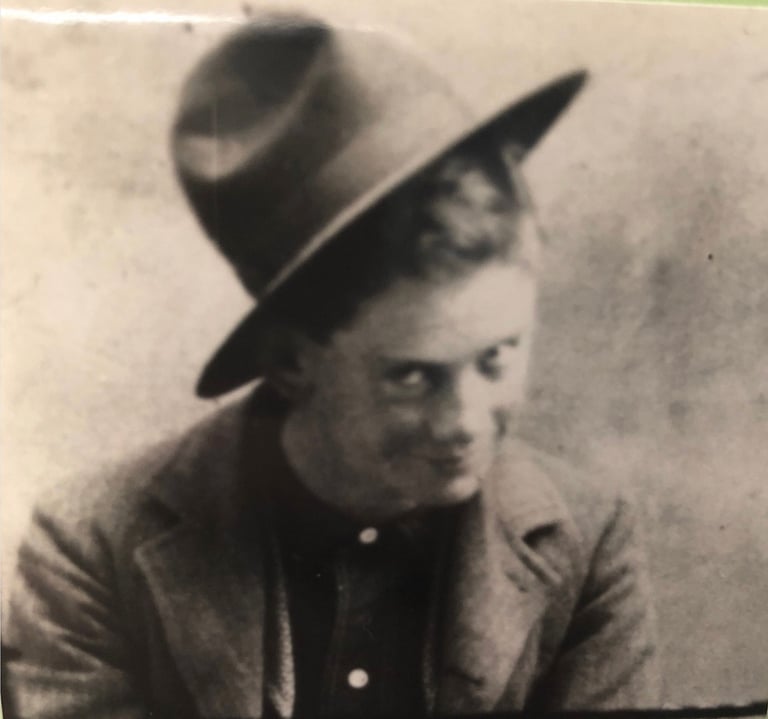
Sam Ireland