The Mennonites and the Aberdeen-Springfield Canal
A short description of the Mennonite involvement in building the American Falls Canal
2/10/20261 min read
By the end of May, the most recent opening yielded twenty thousand acres worth of claims.5 Canal agent were bringing in Nebraskans, and the Reverend for a group of California Mennonites, Jacob Hege, said his members would be filing for ten thousand acres, those plots to be near the holdings of other Mennonites, mostly Germans, already expected to be settling near American Falls. Those earlier Mennonites had visited in 1905, the Blackfoot land agent giving them, as a first look of the County, a tour of the State Insane Asylum's farm.6
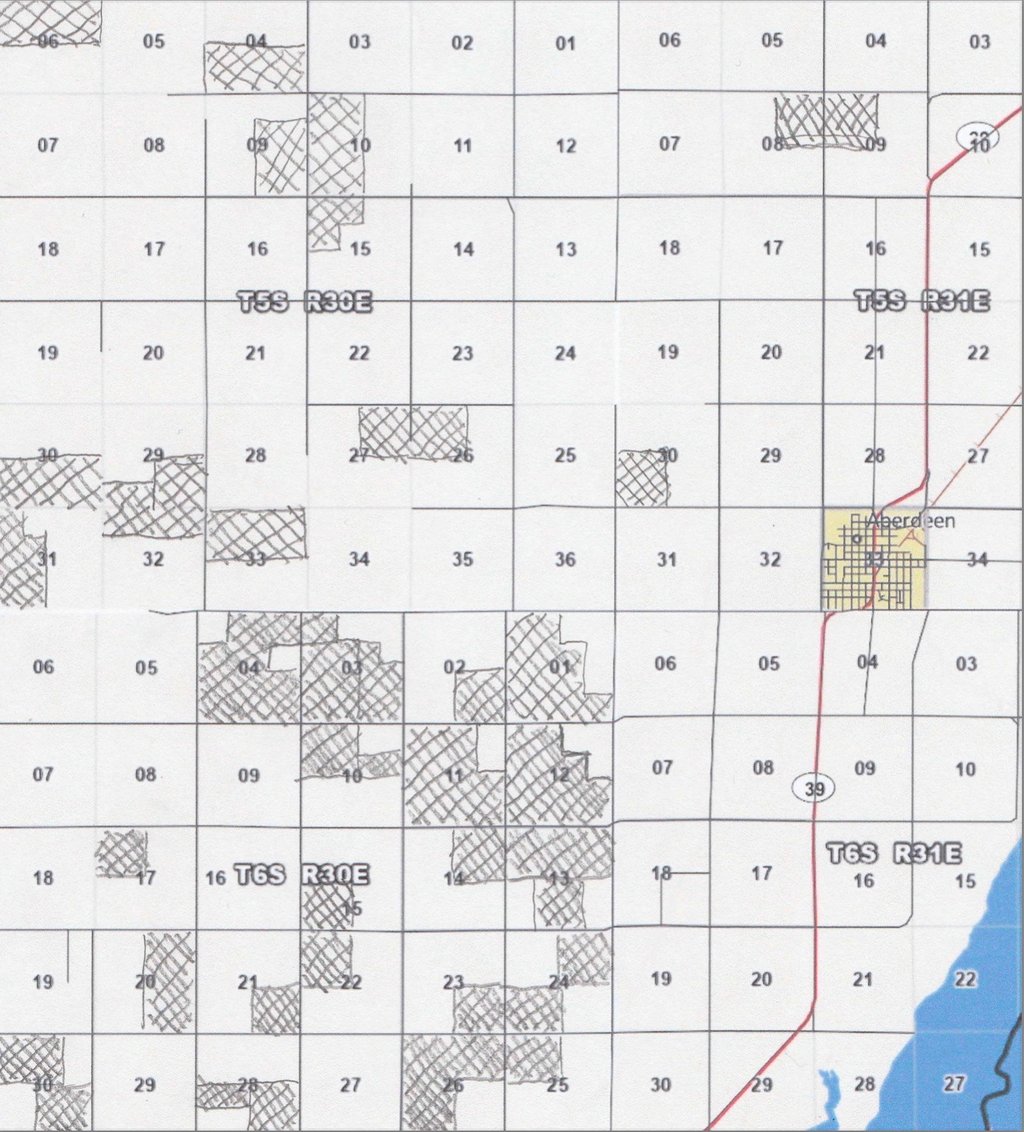
The California sect were of a "better class" than these midwest Mennonites, Hege said, being more educated.7 The midwesterners were expected to arrive by the end of summer and the Californians planned to come in the spring of 1907. Below is the best approximation of pre-1911 Mennonite holdings (there would be more in the following years), virtually all of which lay outside the reach of the American Falls Canal.
The Aberdeen townsite is crosshatched in section 33 to the map's right. Approximately two thousand more acres were in Mennonite hands further south, toward American Falls—totaling over 11,000 acres.
The Mennonites filed on dry farm land because they were unaccustomed to irrigation—in Europe, in the Midwest, in California, farmers raised grains in conjunction with the climates of the areas which provided adequate rain. Brought to Idaho with hype from the canal company and the railroad that suggested a more amenable climate, they utilized the only information—misinformation, it turns out, even if only by omission—to guide their land selection.
The Idaho soil and climatic conditions weren't quite what was advertised. It was often said that the reason nothing ever froze, as was claimed, was because after the jackrabbits and the drought had taken their dues there was nothing left to freeze.8
The group didn't benefit much from the canal itself, but many of the adherents found work building the system, some taking contracts that gave them responsibility to complete particular sections. Many were German speakers, which would eventually lead to internal friction for the group—some wished to keep services in the mother tongue, others thought it best to assimilate. So strong were Mennonite ties that for one faction, to marry a non-Mennonite was instant expulsion.9
Their internal wrestling match over whether to deliver sermons in English or German ended a few years later when WWI began and anti-German sentiment grasped the country and the area. Assimilation came very quickly.