The Taber Census
Census in rural Bingham County
7/8/20262 min read
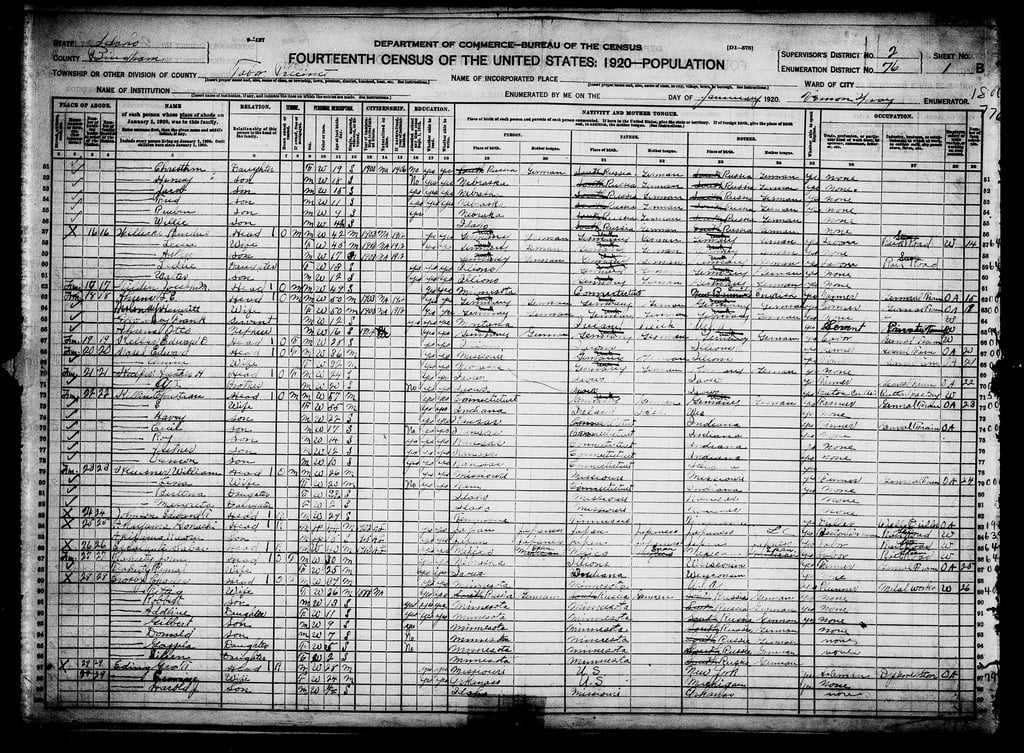
1920 census takers operated in a different climate than those of earlier censuses—literally. They did their enumeration in January rather than the typical April. It was thought that more people would be home to be counted in a winter month since the American population was so rural at the time, making them more easily counted and the census consequently more accurate. Census Department heads didn't consider the increased difficulty for the census takers who now had to traipse through freezing temperatures, snowdrifts, over roads not easily traversed. Enumerators in Bingham County's rural areas received six dollars a day while those taking count in 'urban' precincts were paid by the number of names they accumulated. A 'small allowance' was given for upkeep of a horse—riding horseback from Taber homestead to homestead in January couldn't have been an easy task.
Had the 1920 census come just three years earlier to the Taber area, at a time when the desert dry farm yields seemed incredibly promising to newly nested homesteaders, it would have likely shown double the inhabitants, but it came after two years of severe drought, as many Taber precinct dry farmers were fleeing or had already fled. The hope-inspiring early years of ample winter snows and well-timed spring rains had given way to a 'normal' climate that the recently arrived residents had had no prior knowledge of and were getting too well acquainted with. 1919 especially was a bad year, enough to drive two hundred Dubois Mennonites completely out of 'Dutch Flats' to the north and pushing most of the Big Bend (now Rising River) settlers to wetter climes, and the Taber homesteaders, for the most part, agreeing with their cohorts' assessments and throwing in the towel, too. The single hope that remained may have been the proposed Dubois Canal that would run from Ashton to Taber to American Falls—the possibility of irrigation likely kept even the long-term disappointed on their desert acreages for another year.
Despite the hard times and diminishing population, the Taber precinct census count still hit 183 people—140 of them from 29 different states and another 43 from 9 foreign countries. The heavy numbers of relocated Utahans and Idahoans evident in other Bingham County precincts weren't replicated in Taber. Just thirty-one were born in Idaho and only 9 in Utah. The states of Illinois, Washington, Minnesota, Nebraska and Kansas superseded or nearly matched the Utah numbers. And there were, by far, more residents from Russia and Germany than from Utah—29 were Russian or German born—those coming from Russian spoke German, so presumably were part of the 'Volga Germans' that had been welcomed into Russia by Catherine the Great in the mid 1700s to farm the Steppe's open farmlands. She promised no taxes, no conscription, and said they could keep their culture and language but by the mid 1800s, when the feudal system in Russia was abolished, those agreements eventually went by the wayside. The Volga Germans moved to the American Midwest and from there some made it to Aberdeen, Taber and other Idaho rural areas.
By 1930, there weren't enough Taber residents to earn their own census precinct. Not until the 1950s, when sprinkler systems became available, did farming return to the area at any scale.