Warbonnet and Bilious Creeks
Two reservation streams named after early cattlemen
7/24/20264 min read
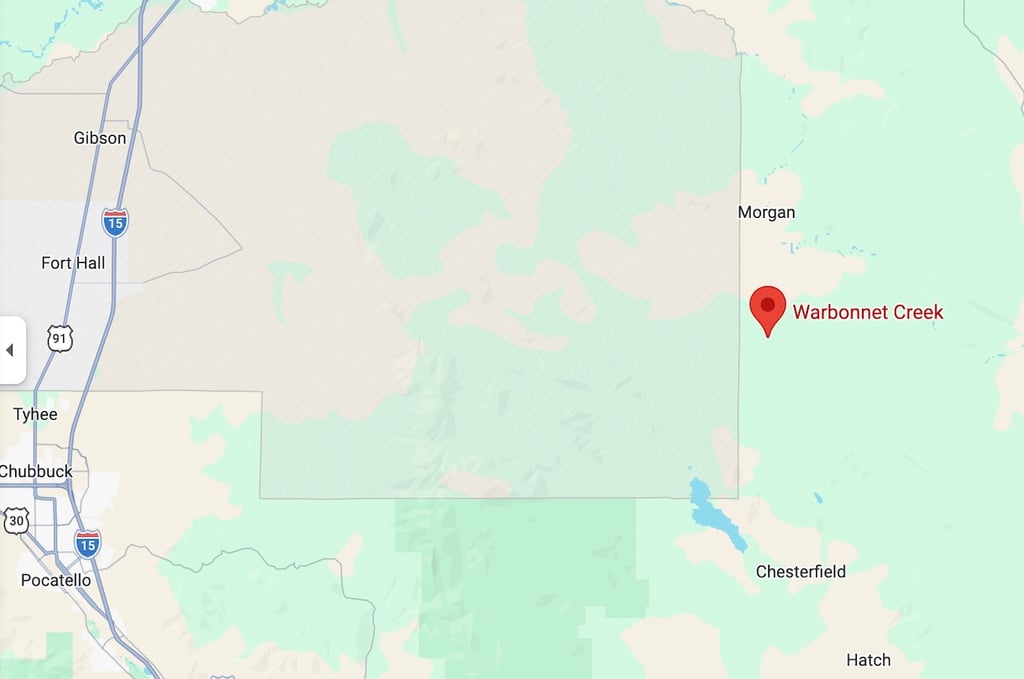
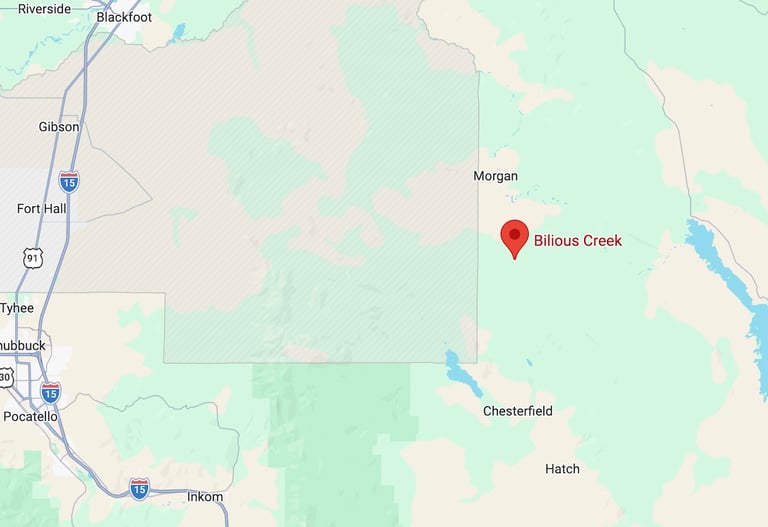
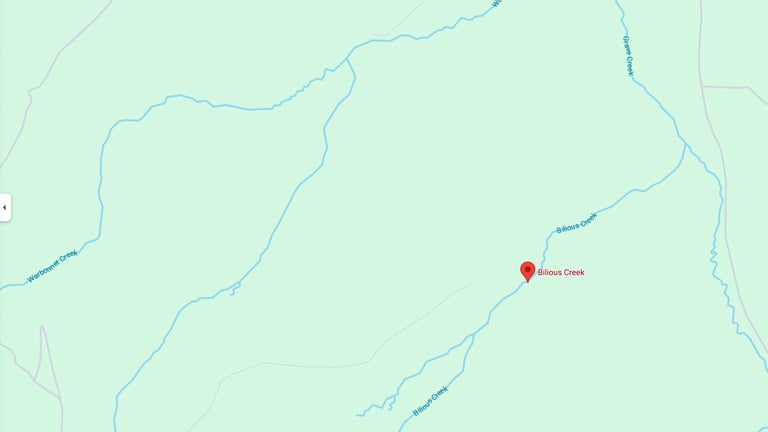
The attached maps show the location of two small creeks east of Fort Hall, Bilious Creek and the Creek it flows into, the War Bonnet. They take their names from a well-known cowboy of the late nineteenth century and the company he worked for.
When the train first started appearing in Blackfoot in 1878, the practice of the cowboys in town at night included taking potshots at the locomotive's headlight as it approached (alcohol may have been involved on most of those occasions). Bilious McDaniel took that prankish act to its expected conclusion one night and succeeded in shattering the light that led the train—at that time, a smaller engine on a narrow-gauge track (it would be a few years before the wide track we see nowadays was locally adopted). He was fined twenty dollars (800 dollars, adjusted to today's monetary units). It was just one, of many, colorful events he would be known for.
McDaniel, born in Texas in 1856, was notorious for his hijinks. He reportedly ordered a steak at a Blackfoot establishment that came a bit on the rare side for his tastes, so he threw it up in the air, took his pistol out and shot it as it fell. "I prefer my steaks killed first," he reportedly said.
Bilious received his moniker as a crewmember that included numerous others also named Bill or William. To make it easier to get their attention, they became William, Billiam, Willis, Wilbur, and Bilious. Given his character, his nickname stuck.
He trailed at least three longhorn herds from Texas, the first to South Dakota's Pine Ridge Reservation, the second to Walla Walla, and the third, comprised of three thousand head, to Eagle Rock (now Idaho Falls) in 1880. That drive was for the War Bonnet cattle company which he foremanned for many years. It ran cattle from Island Park to Soda Springs to Twin Falls, conducting many of its roundups at what is now Pocatello—which was nothing but a sod shack in 1874 when Bilious first came through. Though cattlemen didn't winter their herds with hay at the time, they could buy it for a dollar a ton from the tribe should they need it to feed their horses.
McDaniel's son Walter, in an article in the Idaho State Journal, related several notable incidents that Bilious witnessed, including two friends shooting it out and one being killed. Another friend was killed at a Soda Springs saloon he was patronizing. And he rode into American Falls just after three men had been hanged from the railroad bridge for stealing horses from the railroad work gang. He claimed to have walked the trestles of that railroad bridge before it was completed with ties, taking—by his account—a young boy under one arm and a dog under the other to make the crossing.
When the War Bonnet was sold (around 1885), Bilious got married and homesteaded at Tilden on the flats below what is now Sterling. There he started a cattle herd and bought and sold horses. One transaction had him buying 135 horses locally for $35-50 a head and selling them in Texas and Mexico for $75-125. The McDaniels sold their ranch at Tilden and moved south but returned in 1898, when Bilious was lured to work for the Keough brothers, which summered cattle near Soda and wintered them on the Fort Hall Bottoms.
The War Bonnet was a syndicate of London investors, the infusion of foreign capital a common practice at that time throughout the West, that came to Eastern Idaho in the late 1870s. They established their home ranch on the south side of the Blackfoot River, west of where the Blackfoot Reservoir Dam now is. They built corrals for their bulls on what became Corral Creek. When the train reached Soda Springs in 1882 they began shipping cattle on it rather than driving them eastward to railroad hubs in Wyoming and Nebraska. The company shipped three thousand cattle the late summer after the train's arrival to Soda—reportedly the first cows transported on that train. It took 140 cars to hold the herd, the cattle all being longhorns and thus only 36 fitting per car.
The War Bonnet ranged its cattle north of Soda in the spring and summer, then moved them to Ross Fork in the fall. They pastured them clear to American Falls on ground leased from the tribe. The War Bonnet soon had competition from other consortiums, including Vermont's Bar Seventy Bar (owned by William E. Hawks, who would become vice-president of Pocatello's First National Bank), Burke Land and Cattle and the Mormon Church's herd. There is a story, no doubt oft-related and honed over time, about a War Bonnet syndicate member that came from London to look at his investment, bringing with with several trunks and bags—and a bathtub. When the cowboys unloaded his belongings at the foreman's house, they pretended to think the bathtub was a boat and had a great time trading inside jokes about the city slicker. They took him snipe hunting once, leaving him out in the prairie night by himself, and on another occasion scared him by shouting 'bear' while on a ride to take a look at the herd. The cowboys' horses jumping the nearby fence but the investor's balked, throwing him over it. He didn't stay long after that.