White Slavery in Idaho
The Mann Act was invoked several times in Southeast Idaho in the 1910s
2/17/20265 min read
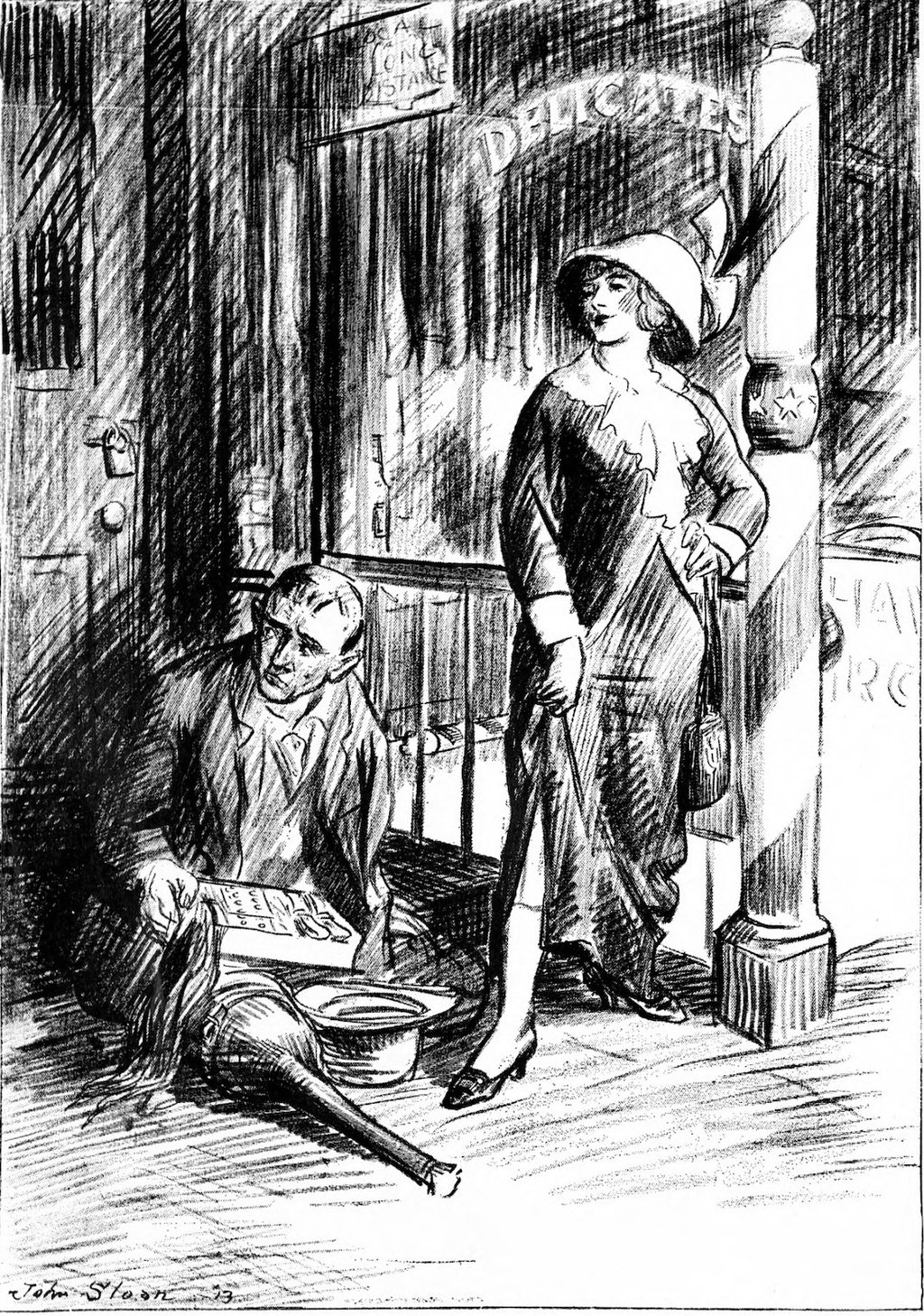
—Putting the best foot forward, John Sloan
"Pedophile Rings" is a catchphrase of our time bound to be successful as clickbait for conspiracists and others who benefit from alarm, curiosity and anger. It also elicits the moral indignation of those who, accurately or inaccurately, deem themselves virtuous. It's a variation of emotional hysteria that has erupted from time to time throughout mankind's history, most markedly, perhaps, in the passage of the 1910 Mann Act—also known as 'The White Slavery Act." Both R. Kelley and Jeffrey Epstein were convicted under this statute.
The Act arose from a worldwide phenomena of the time period, cartel-type organizations supposedly moving women, some voluntarily and some under duress and even kidnapped, into settings of prostitution. The Mann Act addressed this by making it illegal to transport a woman for prostitution, debauchery or any other immoral purpose. That ambiguous language eventually allowed prosecution of even those adults in consensual sexual arrangements or of different racial makeups.
It didn't take long for local prosecutors to pick up their new legislative weapon. The White Slavery Law was invoked in a Pocatello trial in the February 1911 of a couple who enticed sixteen-year old Cora Frohm, whose mother worked at a local laundry, into the profession of prostitution. Frohm testified that she was "flattered, trapped and led into a life of shame by 'cadets'," a gang of young men whose sole purpose was to entrap young women for immoral purposes. The prostitution 'cadet' system, according to authorities, paid fifty dollars for the delivery of a good looking woman, a hundred for an underage one who was a "stunner." Herbert Gould, a waiter, was sitting trial for the offense against her, charged with placing her in a house of prostitution in Pocatello. His alleged accomplice, May Brown, sat beside him in the court. By the reporter's account, Gould was '"large, sleek, suave of manner" and "dressed in a natty gray suit and odorous with perfume." He listened "without the slightest impression" while Brown, seemed moved, "almost wept" before the court. She would be sentenced to five and a half years in prison, Gould would be sentenced to seven and a half.
By April, Pocatello saw two more arrests of white slavers, one of the accused a Korean, Qwan Ha Ray, and the other C.C. Ostrander, a local man. The Idaho Statesman at that time claimed no town in the state was of sufficient size for a good prostitution "market", so slavers plied the trade from Pocatello to Hailey, Portland, Salt Lake, and Ogden, utilizing the train system to move the girls. Ray and Ostrander purportedly found the girls in Pocatello and then transported them to Ogden. The arrest of the Korean man played into anti-Oriental sentiments, and the population of Koreans in Boise came under scrutiny and Japanese were being investigated, too.
Ostrander, an Oregon Short LIne brakeman, was accused of securing an employee's pass from Pocatello to Ogden and then adding 'Mrs.' before his name, giving the pass to the procured woman who met Quan Ha Ray in Ogden and then returned to the house of ill repute in Pocatello. He was sentenced to six months in the county jail, while Qwan was given three months. Another white slaver, Frank Maling, was also sentenced to three months then. The men were believed to be part of a much larger ring.
It wasn't long before exuberant law enforcers expanded the law's reach by arresting an eloping couple in June. A Salt Lake man had ran away with another man's wife to Pocatello. They were apprehended at Soda Springs and he was charged with white slavery.
A young 'lady' used the white slavery charge in the summer of 1912 when she and her male companion were detained at Wapello for horse thievery. Twenty-five year old Lillian Benedict claimed she was lured by a Lost River man named Barnard to accompany him from Pocatello, where she "hashed in a Greek beanery," to help on his ranch for six dollars a week to assist his wife. When they got to Arco, she re-thought her decision and while Barnard was drinking in the bar she headed for other parts with the team of horses. She left a note that read: "We are going to Pocatello where we will leave the team for you. You can't make a white slave of me." She enlisted a local young man, Noble Hawes, to join her guide her back to Pocatello. They were in no hurry, spending the night on the desert, eventually en route to the Presto area near Wapello.
In July of 1913, the law had been further re-interpreted, its vague language of 'immoral purposes' useful as a tool to discourage interracial marriage. A Japanese man who was cohabitating with a white woman was charged with white slavery in Pocatello. George Tokeshi, serving time for the charge, was deported as an "undesirable citizen" in September while the white woman who married him was still in Blackfoot, working as a laundress.
An Ogden couple was charged in Pocatello in 1914 with white slavery, and later that year Frank Brown found himself on the scene of a young girl's opium overdose and was charged with the same. A white slavery trial in Idaho Falls in 1916 saw the father of one of the girls in question hurl a chair at the defendant, breaking his jaw. Another example of the law's extensive reach: a man brought a woman from Yellowstone Park to stay in Blackfoot for 'immoral purposes' and was alerted by the woman's husband. He was charged with white slavery.
Though most of the major prostitution rings had been broken up by the end of the teens, the Mann Act continued to be a handy weapon for law enforcement. Two Pocatellans, the twenty-five year old son of Pocatello's chief probation officer, and his married consort who had left her husband and a small son, were apprehended in Portland in 1919, and he was indicted for white slavery for his action. He had been in Portland working and preparing for her arrival for weeks.
The most celebrated and reviled instance of the Act being invoked involved Jack Johnson, a black prize fighter whose rise to world champion sparked race riots when he beat a white fighter for the championship. His relationship with a white woman (whom he would marry) made him a target of the Mann Act in 1912. Though his wife refused to testify against him, he was convicted and sentenced to a year and a day in prison. He fled the country for seven years to avoid his sentence but eventually returned to the U.S. and did his time.
The Act would be used randomly thereafter for actions other than those of the legislation's main intent, with Charlie Chaplin and Chuck Berry among the notables to suffer its reach. It still exists, as Epstein's and Kelly's convictions can attest, though it has been amended and is applied only to criminal sexual activity, thus making it no longer a weapon to prosecute extramarital affairs, premarital sex or interracial relationships.