Yandell Mountain
The Yandells contribution to Bingham County and Fort Hall
7/8/20266 min read
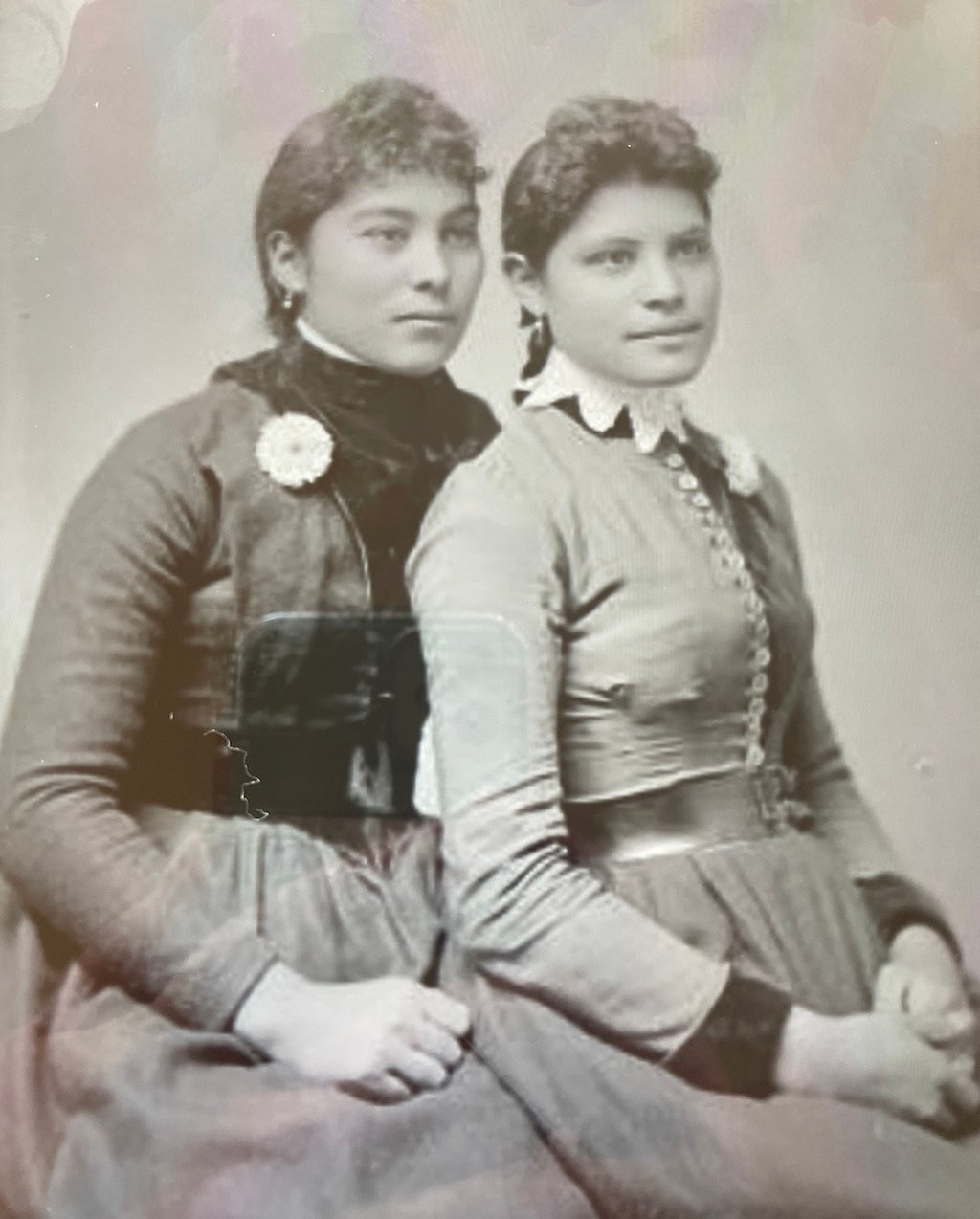
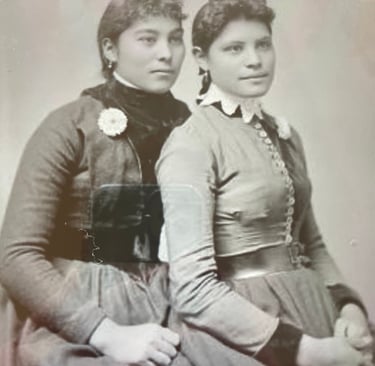
Minnie Yandell
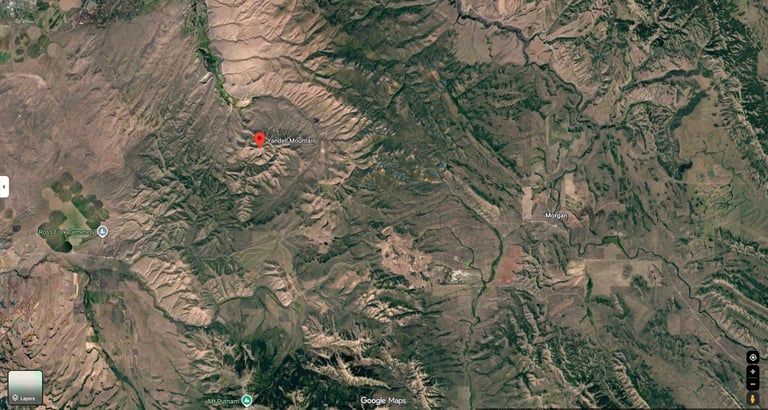
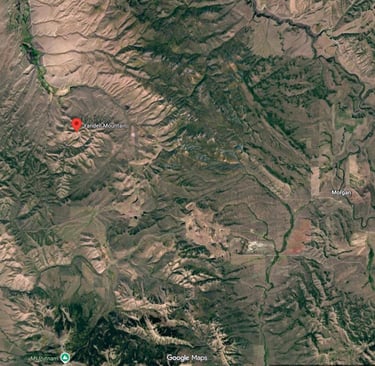
Almost 6400 ft high at its top, (Stevens Peak is 5351, Mt. Putnam 8800) Yandell Mountain isn't the most recognizable of Idaho's peaks, but it was an important place, being alongside the Lander Road section of the Oregon Trail, for emigrants as well as for the Yandell family after which it is named.
Isaac "Doc" Yandell came through Idaho early, settling in the area prior to the existence of Pocatello. He rubbed shoulders with the other early trappers, including the Sublettes, and claimed he had title to land under a grant given to him by the English-owned Hudson Bay Company which operated the original Fort Hall through the 1840s. The US government, however, didn't recognize his claim, so Yandell would eventually file on a plot of land four miles west of Chubbuck on the Portneuf River late in his life.
A Tennessean by birth in 1830, Doc moved to Missouri with his family at the age of 7. At fourteen he went across the Plains into California, went again as the Gold Rush began in 1849. He stayed for three years before heading to Nevada, then was drawn to the Boise gold fervor in 1854. A year later he married the daughter of Chief Spread Eagle, a Bannock native. He left Idaho to serve with the Southern states during the Civil War, then returned to his family of (eventually) three children, Elizabeth, Jefferson Davis Yandell, and Mrs. T. B. LeSieur (pictured).
His movements through Wyoming directly following the Civil War would eventually take him to a Missouri courtroom nearly forty years later. Doc Yandell would be a key witness in a turn of the nineteen century estate battle over Pinky Sublette's property—Pinky was the younger brother of Captain William Sublette, the 1830s leader of trappers in the region whose name graced the Sublette Cutoff through Wyoming on the Oregon Trail, a shortcut that saved emigrants nearly seventy miles on their way West. Claimants to heirdom fought for the Sublette estate which included property that was valued at $3 million (120 million in today's money, significant enough). The crucial question of the court fight was this: was the original heir of the property Solomon Sublette's (brother to Andrew, William, and Milton, all of whom had died) daughter Fanny, who died at the age of four in 1865, or his other brother Pinky, whose death date was in question. Fanny's side of the court battle claimed Pinky went up the Missouri in 1829 to trap and live with the Indians and never returned, his death coming at the hands of hostile Blackfeet tribesman. A witness, a relative of Pinky, testified that Pinky's brother Andrew had told him Pinky died in a Blackfoot Indian raid prior to 1847, but that Andrew didn't see it happen and didn't see a body, just believed Pinky couldn't have survived—despite Andrew having escaped the same raid. Lawyers for the opposing side of the estate battle said there must have been two Pinky Sublettes, for they had Pinky's bones in the courtroom as a primary exhibit.
If Pinky Sublette lived after Fanny's death, he would own one-eighth of the Sublette fortune. If he had then died unmarried and childless, his share would go to his uncles and aunts. Those hundred potential heirs hired a lawyer, Thomas Crews, in 1897 to determine just when Pinky died. All Crews had to go on was that Pinky was a trapper in the West, but after following every meager clue he narrowed the place of his death to Unity County in Southwest Wyoming. Crews, in his digging for evidence, found an old man who'd been a Pony express rider and a ferryman at Green River (Isaac Yandell) who said he met Pinky on the banks of Fontenelle Creek in 1865, where he resided in a shack just a mile from its outlet to the Green River. Yandell had spoken with the man, who stated he was William Sublette's brother, and Yandell said that Pinky died in 1865 alone in his cabin, was then buried by neighbors on the open prairie in a grave marked by a stone slab taken from the creek bottom.
Crews took a trip to Opal, Wyoming, to Charles Robinson's ranch, on which purportedly Pinky's grave was located. Robinson had seen the alleged headstone upon which was carved P.W.S. D (died) 1865 and had wondered whose it was. Initally, Crews was unable to locate the headstone but after much time and effort he found the stone. He dug four feet down until he hit a crude coffin composed of rocks. In it was a well preserved skull and many bones. He transported the bones and skull to the ranch, then took them by train to the Missouri Courthouse where they would be used in the estate trial.
Opposing lawyers explained: there must have been two Pinky Sublettes, the latter, whom Doc Yandell spoke of, not of the William Sublette clan. The Judge ruled in their favor, saying that the present property holders, heirs of Fanny, could keep their wealth.
However, the estate fight wasn't over, for an 1856 will surfaced a few years later, one in which Solomon Sublette (father to Fannie, brother to Pinky) left his property to nearest relatives on his father's side.
Among the owners of property whose interests were at stake included George Q. Thornton, the Carondelet Foundry Co., former Gov. David R. Francis, Congressman Bartholdt, the Pattison Avenue Baptist Church, the Board of Education of St. Louis, the Right Rev. John J. Glenson, Archbishop of the Catholic Diocese of St. Louis, the Anheuser-Busch Brewing Association, Hydraulic Press Brick Co., Meyer Real Estate and Investment Co., St. Louis Smelting and Refining Co., Evens and Howard Fire Brick Co., Sanders Press Brick Co., American Brewing Co., Scanion Realty and Investment Co. Sublette's property, at the edge of St. Louis in his time, had become prime real estate.The court battle would still be going on a decade later.
Returning to the Yandells' story, Isaac Yandell's heirs would file claims on considerable reservation land in both Bingham and Bannock counties, proving up on more than a thousand acres near Yandell Mountain and Yandell Springs, on an acreage near what is now the Fort Hall Casino Exit, and on Isaac's homestead on the Portneuf. Jeff Davis Yandell's daughters Eva, Elizabeth, Edna, stepdaughter Lizzie, and Lucy each had 180 acres and he had the same size piece of ground. Isaac had his forty on the Portneuf four miles west of Chubbuck.
Isaac's son Jefferson Davis Yandell, half-Native, spent three years as a druggist's clerk 'learning chemistry' and became proficient as a blacksmith and carpenter before settling down to cattle ranching. He also claimed to be a doctor. He lived on Lincoln Creek near 'the warm springs'. He married Elizabeth Parker—whose father claimed to be the second white settler in the area, Beaver Dick being the first. Elizabeth had previously married (in 1893) at age 16, when she was a student at the Fort Hall Indian School. Her husband was Dr. John Woodburn, eighteen years older, who had once practiced at the school. Woodburn, a close friend of Senator Frederick Dubois, and she moved to Marysvale, Wyoming. After she had a child and they divorced just a couple years later, Woodburn would politic through Idaho with anti-Mormon rhetoric for years, following in Dubois' steps. Lizzie married Jefferson Davis Yandell in 1899. Her (and Woodburn's) daughter Ella (b. 1895) would be taken in by J.D.
In 1899 Isaac Yandell's daughter Minnie would marry Cherokee T.B. LeSieur, an important man in Reservation history. He simultaneously became Superintendent of Livestock and Fort Hall police chief in 1912, had the uneasy responsibility of shutting down the tribal sun dance at that time—the federal government had outlawed the practice. He also nabbed bootleggers for selling to Natives, an illegal act at the time, and was shot through a lung in 1915 while apprehending one such offender. It took him a year to recover from that wound. In 1917 LeSieur sold his cattle for the highest price in the state, at $8.45 a head, and he was an outspoken critic of the Reservation grazing land practices at the time, which favored white cattlemen over Natives under the guise of them running more profitable operations. He is credited with helping launch the Indian stockman Association in 1921 (the Native consortium ran 5000 cattle that year) along with Ralph Dixey and Pat Tyhee. He died in 1921.
Faulkner, Marshall, Lenon, Twitchell and other recognizable names still extant today intertwine with the lineage of Yandell and LeSieur, marking the reach of the family's impact. You can read more about the Sublette Trial at https://oregontrailgenealogy.com/mystery-of-the-sublette.../
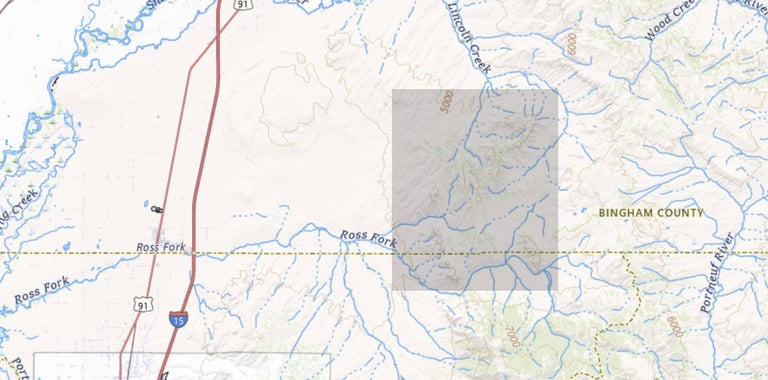
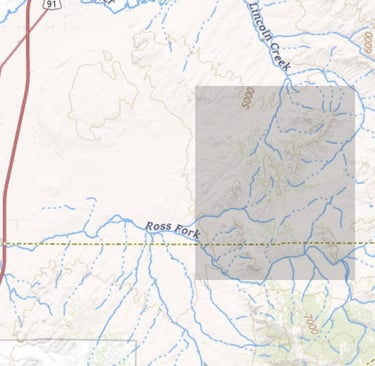
and if you're driving out east of Fort Hall the coordinates for Yandell Mountain are 43° 5' 54'' N, 112° 9' 18'' W (DMS)